NFL
Kirk Cousins Is Back in Minnesota, and Suddenly the Vikings’ Super Bowl Math Looks Different

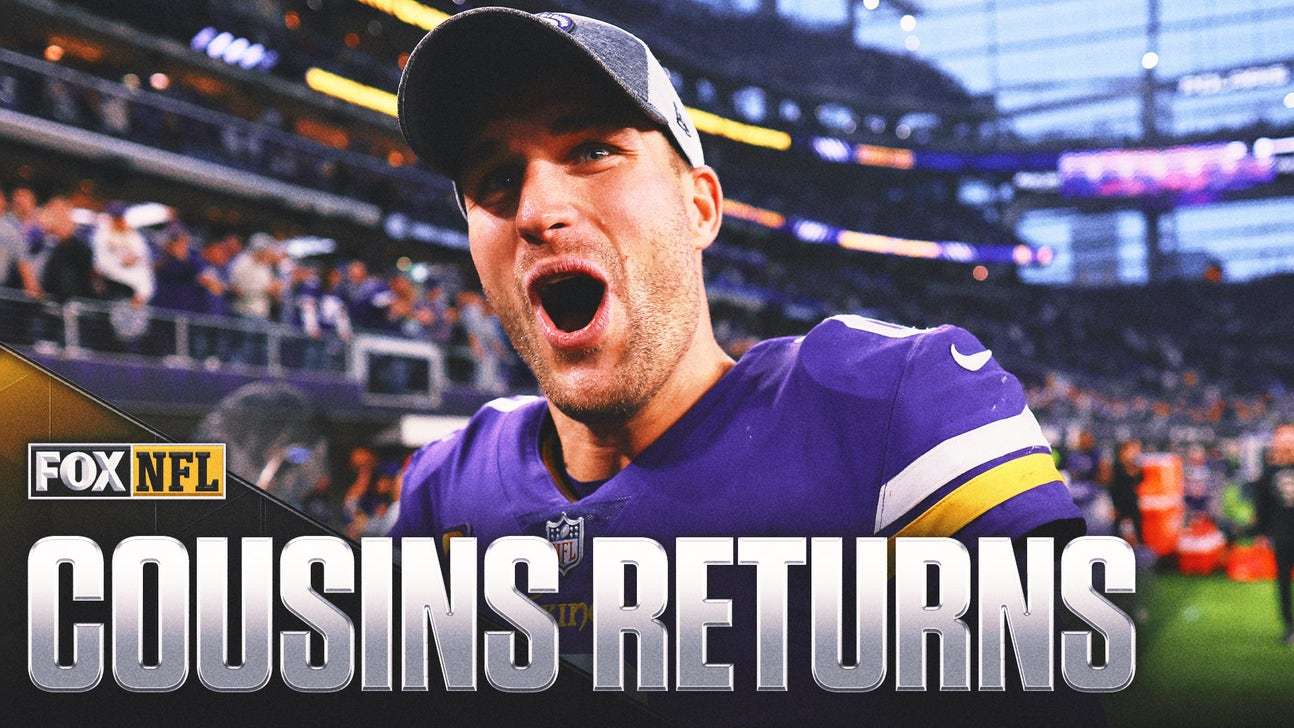
The NFL trade deadline usually produces a few sensible upgrades, a handful of depth moves and at least one transaction that makes everyone check the calendar twice.
This year, that transaction belongs to Kirk Cousins.
The Minnesota Vikings reacquired their former starting quarterback from the Las Vegas Raiders on Tuesday, November 10, sending a 2027 third-round pick to Las Vegas. Cousins returns to the franchise he led from 2018 through 2023, reunites with head coach Kevin O’Connell and, most importantly, steps into a Vikings team that believes its season is still very much alive.
It is one of the stranger NFL reunions in recent memory. Cousins left Minnesota, signed with Atlanta, spent time in Las Vegas, mentored the No. 1 overall pick and then returned to the Vikings before the regular season even reached Thanksgiving. His career has now completed a full circle, with several expensive detours along the way.
Minnesota needed certainty at quarterback
The Vikings enter the deal at 6-2 and in the middle of a crowded NFC playoff race. Their defense has given them a legitimate foundation, but the offense has not consistently matched that standard at quarterback. Minnesota did not need a quarterback who could reinvent football. It needed one who could operate the offense, get the ball out on time and avoid turning every Sunday into a referendum on the position.
That is still Cousins’ best argument.
He is not the most mobile quarterback in the league, and nobody is confusing this move with a long-term solution. But Cousins knows how to run a timing-based offense, understands the demands of O’Connell’s system and has already played winning football in Minnesota. During his first season under O’Connell in 2022, Cousins threw for 4,547 yards and 29 touchdowns while helping the Vikings finish 13-4.
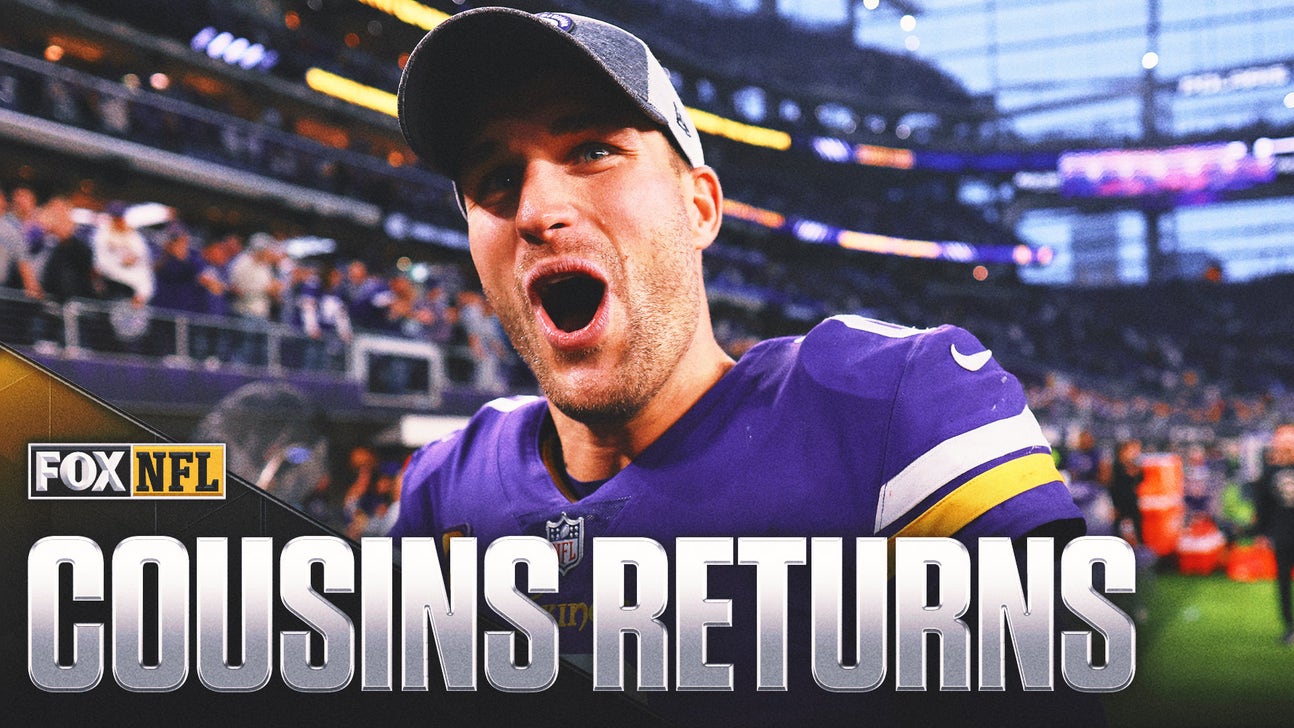
The Vikings are not asking him to become a younger version of himself. They are asking him to be the experienced, accurate distributor he was during his most productive years with the franchise.
That is a much more reasonable request.
Cousins also brings something Minnesota’s recent quarterback situation could not: immediate familiarity. He does not need months to learn the language, build trust with the coaching staff or understand the rhythm of the offense. He knows O’Connell. He knows the terminology. He knows where Justin Jefferson expects the ball on the routes that have produced some of the best quarterback-receiver chemistry of the past decade.
That familiarity could matter quickly.
The Jefferson reunion is the fun part. The defense is the reason it matters.
Justin Jefferson is the obvious beneficiary of Cousins’ return, at least on paper. The two connected throughout Cousins’ Minnesota tenure, and their working relationship was built on more than highlight-reel throws. Cousins trusted Jefferson to win isolated matchups, uncover late and make difficult catches look like routine business.
For Jefferson, the reunion should bring back a quarterback who already understands how aggressively he can be used. For Cousins, it means returning to a roster with a proven superstar who can rescue imperfect plays and punish defenses that lose focus for even half a second.
That does not guarantee a repeat of their best years. Football is not a nostalgia machine, and quarterbacks do not get to borrow their younger legs from the equipment room. Cousins is 38, coming off a nine-game run with Las Vegas, and the Vikings will have to protect him from the kind of pressure that turns a pocket passer into a stationary target.
But Minnesota’s defense gives the reunion a chance to work.
The Vikings have played well enough defensively to stay in the NFC race even when the offense has sputtered. That changes the standard for Cousins. He does not need to throw for 400 yards every week or win shootouts against the conference’s elite quarterbacks. He needs to keep the offense on schedule, convert third downs, finish drives and stop giving opponents extra possessions.
In other words, Minnesota needs competent quarterback play with occasional brilliance. Cousins has spent most of his career living in that neighborhood.
Las Vegas got exactly what it wanted from Cousins
The Raiders’ side of the deal is just as interesting. Las Vegas signed Cousins to serve as a bridge starter ahead of Fernando Mendoza, the No. 1 overall pick in the 2026 NFL Draft. That plan worked almost perfectly.
Cousins gave the Raiders nine games of steady quarterback play, helped them reach a 4-5 record and provided Mendoza with an extended education in how to prepare for an NFL season. Reports indicated that Cousins also became a valuable mentor for the rookie, giving Las Vegas something that cannot be measured in passing yards alone.
Now the Raiders get a third-round pick and clear the runway for Mendoza.
The contract structure made the arrangement even more unusual. Cousins’ 2026 deal was essentially a one-year bridge, with the Raiders responsible for only a portion of his total guaranteed compensation. Las Vegas reportedly paid roughly $650,000 for the portion of Cousins’ season he spent with the club while receiving a productive starter, a draft pick and months of development time for its young quarterback.
That is not merely a trade. That is a reasonably well-organized exit strategy wearing shoulder pads.
Mendoza now takes over with the benefit of having watched a veteran operate the offense for half a season. The Raiders may absorb some short-term growing pains, but they also avoid throwing their prized rookie into the season before the organization believed he was ready.
The real question is whether Cousins can raise Minnesota’s ceiling
The Vikings did not make this move because Cousins is the future. They made it because the present still has value.
At 6-2, with a defense capable of keeping games close and playmakers surrounding the quarterback, Minnesota has a window. The team could have continued hoping its existing quarterback situation stabilized. Instead, it paid a third-round pick for a player who already knows the system, already has chemistry with Jefferson and has already shown this season that he can provide reliable play.
That is a clear gamble, but it is not a reckless one.
Cousins does not need to be spectacular for the Vikings to benefit. He needs to be functional in the games Minnesota should win and calm in the games where one or two throws decide everything. If he can deliver that, the Vikings suddenly become a far more uncomfortable playoff opponent.
The reunion may look bizarre on a transaction log. On the field, it makes plenty of sense. Minnesota is betting that a familiar quarterback can give its defense the offensive support it has been waiting for.
And if Cousins can find Jefferson early, settle into O’Connell’s offense and stay upright in the pocket, the Vikings may discover that the road back to contention was not as complicated as it looked. It just required a quarterback who already knew the way home.

The Pittsburgh Steelers have lost one of the quiet architects of their identity.
Dick Hoak, who spent 45 seasons with the organization as both a running back and assistant coach, died Wednesday, November 11, 2026. He was 86.
Hoak never chased the spotlight. He did something more difficult: He stayed. Through the franchise’s lean years, its transformation under Chuck Noll, the rise of the Steel Curtain, and the return to championship football under Bill Cowher, Hoak remained part of the Steelers’ daily machinery.
That kind of longevity is rare in the NFL. Doing it with one organization, in two completely different roles, is almost unheard of.
From Jeannette to the Steelers
Hoak was a western Pennsylvania football product in the truest sense. A native of Jeannette, he starred at Jeannette High School before continuing his career at Penn State. The Steelers selected him in the seventh round of the 1961 NFL Draft, and he spent his entire 10-year playing career in Pittsburgh.
As a halfback, Hoak appeared in 135 games and rushed for 3,965 yards and 33 touchdowns. He led the Steelers in rushing three times and remains among the most productive runners in franchise history.
Those numbers came during a difficult era for the organization. Hoak was not handed a ready-made dynasty. He played for the Steelers before the franchise became synonymous with Lombardi Trophies, black-and-gold dominance, and defensive players who seemed personally offended by the concept of forward progress.
He helped keep the operation moving before the glory arrived.
Hoak’s best rushing season came in 1968, when he produced a career-high 858 yards. He was selected to the Pro Bowl that year, a fitting recognition for a dependable player who brought toughness and consistency to an offense that often needed both.
When his playing career ended after the 1970 season, Hoak did not leave Pittsburgh. Two years later, Chuck Noll brought him onto the coaching staff as the team’s running backs coach.
That decision would shape the next 35 years of Steelers football.
The coach behind five championships
Hoak remained the running backs coach through the end of the 2006 season, working under both Noll and Cowher. He was part of five Super Bowl-winning teams and helped develop or guide some of the most important running backs in franchise history.
Franco Harris and Jerome Bettis became Pro Football Hall of Famers. Rocky Bleier became one of the most respected players of the Steelers’ championship era. Willie Parker became a defining piece of the team that won Super Bowl XL.
Hoak coached each of them.
That list says plenty about his football knowledge, but it does not fully explain his value. Running backs coaches are often judged by statistics, blocking assignments, ball security, and production. The best ones also understand personalities. They know when to correct, when to encourage, and when to let a player work through a problem without turning every mistake into a public event.
Hoak’s reputation was built on that steady influence. He was demanding without needing to perform toughness. He was respected without constantly reminding people of his authority. For generations of Steelers running backs, he was the coach waiting in the room, ready with a correction, a teaching point, or a reminder that details matter even when nobody outside the building notices them.
That approach fit the Steelers perfectly.
A legacy measured in trust
Steelers President Art Rooney II called Hoak a foundational figure for the organization, praising his toughness, loyalty, dedication, and commitment. Those words may sound familiar in a team remembrance, but in Hoak’s case, they describe the substance of his career rather than a convenient tribute.
He was not simply employed by the Steelers for 45 seasons. He became part of the franchise’s institutional memory.
Hoak was there when the team was trying to find its footing. He was there when Noll built the foundation of a dynasty. He was there when Harris and Bleier carried the offense through the 1970s. He was there when Bettis and Parker powered the 2005 championship team. The names changed. The era changed. Hoak stayed connected to the work.
In 2017, the Steelers recognized that contribution by making him part of the inaugural class of the team’s Hall of Honor. The class included many of the franchise’s most celebrated players and coaches, but Hoak’s inclusion carried a different meaning. He represented the people who build championship cultures without becoming the face of them.
In 2025, Hoak also received the Pro Football Hall of Fame’s Award of Excellence for assistant coaches, another acknowledgment of the often-overlooked work that happens behind the scenes.
There will always be Steelers whose legacies are captured by iconic plays, championship photographs, or bronze busts in Canton. Hoak’s legacy is captured differently: in the running backs he taught, the teams he helped shape, and the trust he earned from the organization over nearly half a century.
Dick Hoak gave the Steelers his entire professional life. He played for them, coached for them, and helped connect generations of players who otherwise might have seemed separated by time.
That is why his passing feels larger than the loss of a former player or assistant coach. Pittsburgh lost one of the people who helped make the Steelers feel like the Steelers.
His name belongs alongside the franchise’s most important figures—not because he demanded attention, but because he spent 45 years earning it.
The NFL had its Week 10 schedule set. The officials did not.
After the Federal Aviation Administration issued a nationwide ground stop Friday, the league rebuilt portions of its officiating assignments around a simple limitation: get the crews to their games without relying on air travel. That meant shifting officials to assignments within driving distance of home, elevating backup officials into referee roles and creating one of the strangest Sundays in modern NFL logistics.
Don Willard, normally a side judge, is scheduled to referee two games on Sunday, Nov. 15. He will work Dolphins-Colts at 1 p.m. ET in Indianapolis before making the roughly 110-mile drive to Cincinnati for Steelers-Bengals at 8:20 p.m. ET.
That is not a typo. The NFL has effectively given one official an afternoon assignment, a road trip and a prime-time game before most people have finished arguing about the early window.
A travel problem became an officiating problem
The FAA ground stop began Friday, Nov. 13, after communications issues affected multiple air traffic control centers. The disruption lasted for several hours and created a national backlog of delayed and canceled flights. Even after the ground stop was lifted, the impact continued into the weekend as airlines and travelers tried to untangle the mess.
NFL officials are not simply local employees who report to the nearest stadium. Crews travel across the country for assignments, generally arriving ahead of game day. When flights become unreliable on short notice, the league faces a problem that is less visible than a team missing a connection but just as important: the people responsible for enforcing the rules have to physically reach the field.
The NFL’s solution was practical rather than elegant. Officials were reassigned to games closer to their hometowns, where they could drive instead of fly. The league also relied on its built-in emergency structure, with backup referees stepping into the lead role.
Three backup officials are scheduled to work as referees Sunday. Duane Heydt will referee Panthers-Saints, Barry Anderson will handle Jaguars-Titans, and Willard will take charge of Dolphins-Colts before moving on to Cincinnati.
The backup system is getting a real test
Every NFL officiating crew has a designated backup referee who trains throughout the season to step into that position if necessary. That preparation is usually an insurance policy sitting quietly in the background. This weekend, it became the main plan for multiple games.
There is a reason the league does not simply grab any official and hand over the referee’s white hat. The referee is responsible for the crew’s overall operation, including pregame communication, penalty enforcement, replay procedures and the rhythm of the game. Moving an umpire or side judge into that role requires familiarity with the position and enough preparation to make the transition without turning every third down into a staff meeting.
The changes also show why the NFL treats officiating as a logistics operation as much as a rules operation. The league is not only assigning the best officials to the most important games. It has to assemble complete crews, account for travel, maintain proper coverage and make sure everyone can arrive safely and on time.
In that sense, the goal is not to preserve every original assignment. The goal is to preserve the games themselves.
Willard’s Sunday is unlike anything the NFL usually asks of an official
Willard’s schedule is the headline because of the sheer timing. Dolphins-Colts kicks off at 1 p.m. ET at Lucas Oil Stadium. Steelers-Bengals begins at 8:20 p.m. ET at Paycor Stadium, leaving more than seven hours between kickoffs.
The drive from Indianapolis to Cincinnati is roughly 110 miles, a trip that can be manageable under normal conditions. But “manageable” is doing a lot of work here. An NFL official does not simply walk out of one stadium, toss a jacket in the back seat and hope traffic cooperates. There are postgame responsibilities, security procedures, equipment considerations and the need to arrive with enough time to prepare for the second assignment.
The distance is short compared with the flights officials might normally take, but the day is still demanding. Willard will be asked to reset mentally, physically and procedurally between two different games, two different stadiums and two different crews.
It is also important to be precise about the historical claim. The arrangement appears to be unprecedented, and multiple reports have described it as a first-of-its-kind situation. However, the NFL has not publicly confirmed that Willard is definitively the first official in league history to work two regular-season games on the same day. That distinction matters, especially when the league’s own announcement focused on the assignment changes rather than declaring a record.
Either way, it is an extraordinary workload created by an extraordinary travel disruption.
Why the league made the changes
The NFL could have tried to preserve the original officiating crews and hope the travel system recovered. That would have created a much bigger risk. A delayed official is not like a delayed fan. If a crew cannot reach a stadium, the league has to find a replacement quickly, and last-minute improvisation is exactly what the backup system is designed to avoid.
Reassigning officials by driving distance gives the league more control. Road travel is not immune to delays, but it is more predictable than depending on airports still recovering from a national shutdown. It also reduces the chance that an official is stranded far from the assigned game or forced into a rushed connection.
Safety is the central issue. The league’s changes were not made for novelty or convenience. They were made because air travel conditions remained unstable, and the NFL needed its officiating crews in place before kickoff.
That is the useful takeaway from this bizarre football subplot: the games are staying on schedule because the league was willing to treat officiating like a moving puzzle. Backup officials were prepared. Assignments were reshuffled. One official may spend Sunday working two games and driving between them.
The NFL usually asks its officials to watch everything. On Nov. 15, the league may ask Don Willard to officiate nearly an entire day of football in two cities. A nationwide aviation failure has turned one Sunday into a roadshow, and the most important part is that the whistle should still be ready when the games begin.

The Steelers made the defensive-line decision they had been waiting on Saturday, activating Derrick Harmon from injured reserve and clearing a spot by waiving cornerback Terell Smith.
Harmon's return puts a potentially important piece back on Pittsburgh's 53-man roster just one day before the Steelers visit Cincinnati for an AFC North showdown. It does not guarantee he will be active Sunday night, but it gives him a chance to suit up in a matchup that already carries plenty of personal history.
The second-year defensive tackle returned to practice Wednesday after missing the previous four games with a foot injury. He was limited Wednesday and Thursday before becoming a full participant Friday. Harmon was listed as questionable entering the weekend, making Saturday's transaction the final major hurdle in his comeback.
A return with some history
Harmon already delivered one of Pittsburgh's biggest moments against Cincinnati this season. In the Steelers' 30-27 Week 3 victory, he sacked Joe Burrow late in the game, forcing a fumble that Sebastian Joseph-Day recovered. The play helped preserve Pittsburgh's win and gave Harmon an early signature moment in his second season.
A week later, Harmon suffered the foot injury that interrupted his promising start. He was placed on injured reserve and forced to watch the Steelers navigate the next month without him. Now, the timing of his return could hardly be more dramatic: Cincinnati is the opponent, the stakes are significant, and the defensive tackle has already shown he can affect this matchup.
That does not mean Pittsburgh should expect another strip-sack on demand. Football is not a vending machine, despite how often fans treat it like one. But Harmon's interior quickness gives the Steelers another way to challenge Burrow, particularly if he is healthy enough to handle a meaningful rotation.
Why the defensive line needs him
Pittsburgh's defensive front has held together while Harmon was sidelined, but the unit has had to distribute more work among Cameron Heyward, Keeanu Benton, Yahya Black and the younger players behind them. Sebastian Joseph-Day is also on injured reserve, making depth inside even more valuable.
Harmon brings a different type of disruption to that group. The Steelers announced that he had 12 tackles, one tackle for loss, one and a half sacks and a forced fumble in four games before his injury. Those numbers reflect a player who was not merely filling snaps. He was creating problems in the middle of the line and giving Pittsburgh another interior pass-rush option.
His return could allow the Steelers to be more flexible with their defensive-front rotations. Benton and Heyward would not necessarily have to carry quite as much responsibility, while Harmon could attack guards and centers who have spent the last several weeks preparing for a different group of interior defenders.

The most realistic expectation, however, is measured usage. Harmon has not played since the injury, and even a full practice on Friday cannot completely replicate game conditions. Pittsburgh may ease him in rather than immediately handing him a starter's workload. If he is active, his impact could come in a handful of high-leverage snaps instead of a massive snap count.
The roster move matters, too
To make room for Harmon, Pittsburgh waived Smith, a cornerback the team signed to its active roster in October. That move reflects the roster math that accompanies every injured-reserve return. Activating one player means another player has to go, and the Steelers chose to create space in the secondary for help along the defensive line.
Smith had provided depth at cornerback and appeared in Pittsburgh's recent defensive-back rotation, but the Steelers are also getting healthier at several spots in the secondary. Brandin Echols and Doneiko Slaughter both finished the week as full participants, while safety DeShon Elliott also practiced fully Friday. That gave Pittsburgh a little more flexibility when deciding which position could absorb the loss.
The transaction also shows how highly the Steelers value Harmon's potential contribution. A roster spot is not guaranteed simply because a player is eligible to return. Pittsburgh chose to make the move because the possibility of having Harmon available against Cincinnati outweighed the need to keep Smith on the 53-man roster.
Still, activation and availability are not identical. Harmon can be on the active roster and remain inactive on game day if the coaching staff decides he needs more time. His questionable designation remains relevant until the team submits its inactive list Sunday.
The takeaway
The Steelers did not activate Derrick Harmon because one roster move guarantees a defensive masterpiece. They activated him because the matchup, the injury timeline and the team's need for interior depth made the gamble worthwhile.
Harmon has already made a difference against Cincinnati once this season. Now Pittsburgh is giving him the opportunity to make another one. Whether that means a full return, a limited package or simply a spot among the inactives will not be known until kickoff. But after four games away, the Steelers' defensive line finally has its most intriguing missing piece back in the conversation.

 Featured2 years ago
March Tourney: Big Money ($3 Billion!)

 Sports Gambling News2 years ago
Micah Parsons Dreams of a $40 Million Contract: The Key to His Happiness!
- Featured2 years ago
New York Jets’ Hilarious Attempt to Land Mike Vrabel Ends in Patriots’ Embrace

 General Sports News2 years ago
The Biggest World Series Favorites Since the Legendary ’02 Yankees

 Sports Gambling News2 years ago
Scottie Scheffler: The Betting Favorite at The Player

 Sports Gambling News2 years ago
Marco Penge’s Epic Comeback: From Betting Ban to Euro Tour Glory!

 NFL1 year ago
Jordan Addison’s Suspension

 Pittsburgh Sports1 year ago
Penguins Hall of Fame New Inductees