Sports Gambling News
NFL’s prediction-market ban is the kind of line only the NFL could draw with a straight face

The NFL has managed to do that very NFL thing where it acts like it’s putting the brakes on gambling-adjacent chaos, while also leaving just enough room for everybody involved to keep making money. According to the league, its sportsbook partners can run only one approved product ad during games, and every spot has to clear the league first. But the same breath that bans broad brand-awareness ads also slams the door on prediction-market promotion across games, stadium signage, club sponsorships and player endorsements. So yes, the league is basically saying, “You can advertise here, but only if we’ve already decided exactly what you’re allowed to say.” That’s not a free market. That’s a VIP line with a bouncer in a headset.nnThe funny part is that all three of the NFL’s current sportsbook partners have their own prediction-market products, which means everybody’s in the same neighborhood wearing different hats and pretending it’s a totally different sport. DraftKings has Predictions, FanDuel has Predicts, Fanatics has Markets, and the league is trying to keep those worlds separated like two cousins who got into a loud argument at Thanksgiving. The real message here is bigger than one ad rule: the NFL is fine with betting-adjacent business as long as it stays inside the fence, inside the script, and inside the league’s comfort zone. That may be good policy, or it may just be the most expensive game of “yes, but not like that” ever played on a football weekend.

Sports Gambling News
Ole Miss Walks Into The Swamp As An Underdog, Because Apparently Rankings Are Just Decorative
College football has once again reached the point where the numbers on the TV are just there for ambiance. No. 4 Ole Miss is heading to No. 21 Florida as a 3.5-point underdog, which is the betting world’s way of saying, “Yes, we can see the rankings too. No, we do not care.” Somewhere, an SEC intern is staring at the matchup sheet like it just asked him to explain gravitational theory using only a whiteboard and a Red Bull.
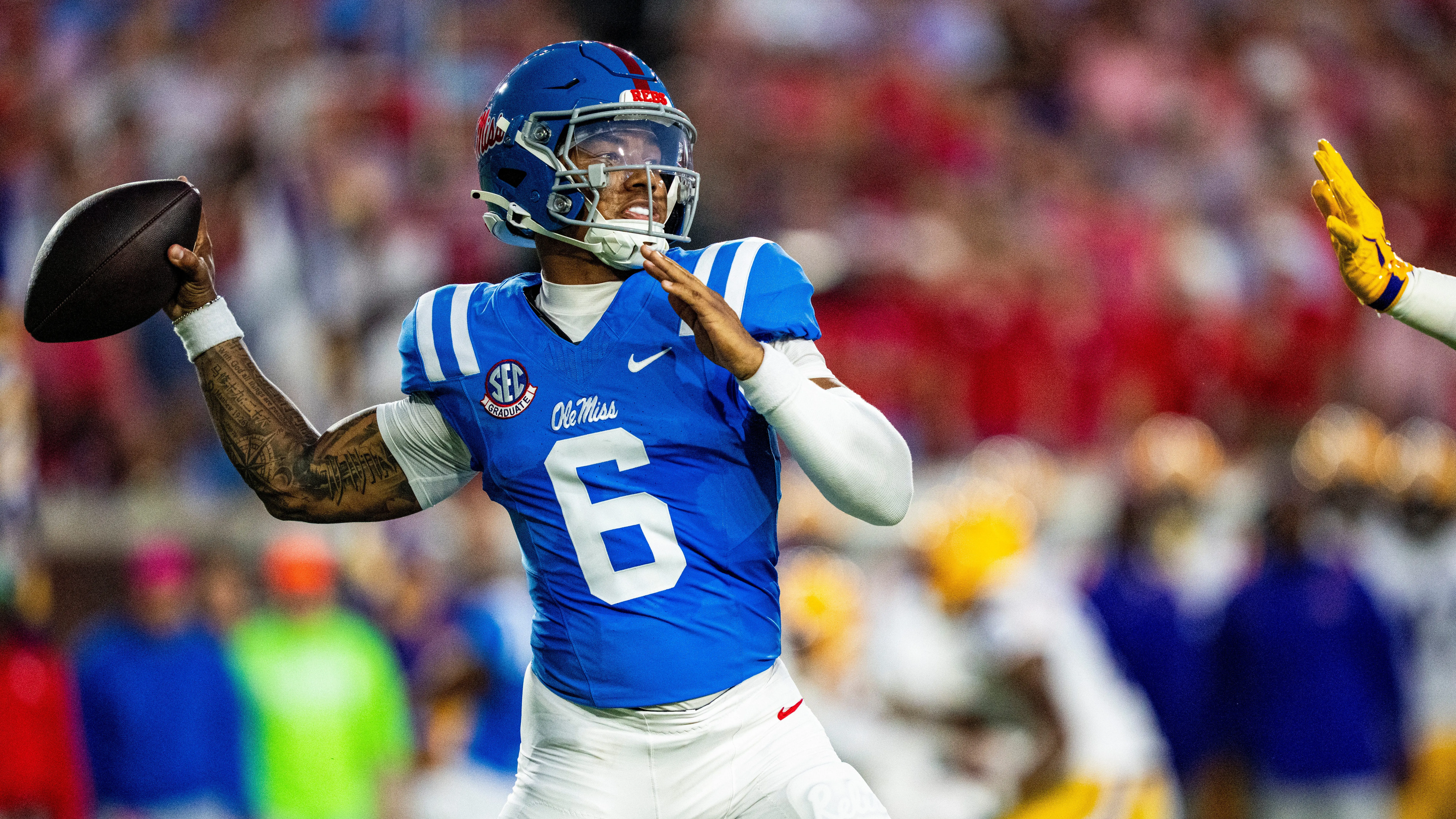
And honestly, the market has a case. Ole Miss is coming off a huge win over LSU, which in college football is basically the equivalent of running a marathon, winning a fistfight, and then being told to go play another one in Gainesville six days later. Add in Kewan Lacy’s injury watch, the swampy home-field advantage in Florida, and the eternal reality that the betting public loves a shiny top-five logo almost as much as bookmakers love making it sweat, and suddenly the Rebels being favored by rank feels about as useful as carrying a compass into a hurricane. Florida, meanwhile, has quietly turned into the kind of team that makes numbers people nod approvingly and fans mutter, “I don’t trust this, which means it probably works.” That is how you end up with a top-five team wearing the underdog tag like a fake mustache.
The funniest part is that nobody involved seems fully surprised except the people who still think college football lines are a reward system for doing well in the AP poll. Oddsmakers are looking at matchup quality, letdown danger, the Swamp, and a Florida team that has upgraded enough to make this a real street fight instead of a ceremonial ranking ceremony. Ole Miss still looks like a contender, but the Rebels are about to learn the oldest lesson in gambling: the spread does not care about your résumé, your vibes, or your victory over a former coach. It only cares whether you can survive 60 minutes in Gainesville without turning a great week into a very expensive anecdote.
Sports Gambling News
Prediction Markets Have Turned Into a Legal Mugging, and Nobody Can Agree Who Started It
Prediction markets were supposed to be the sleek, modern cousin of sports betting — the place where everybody gets to act like a genius before the game, the debate, or the election even starts. Instead, Kalshi, Polymarket, and a bunch of related operators have wandered straight into a courtroom thunderdome, with more than 30 active cases now circling the same question: are these things federally regulated financial products, or gambling with better branding? That’s the whole mess in one sentence, and somehow it keeps getting less tidy. A federal appeals court in April sided with Kalshi in one key fight, saying New Jersey couldn’t regulate its sports event contracts because the CFTC has exclusive jurisdiction, while the federal government has also sued multiple states over their enforcement efforts. Meanwhile, Nevada has pushed back, Arizona has filed criminal charges, and the 9th Circuit hearing looms like the part of the movie where everyone checks the exit signs and realizes there are no exits. (actionnetwork.com)
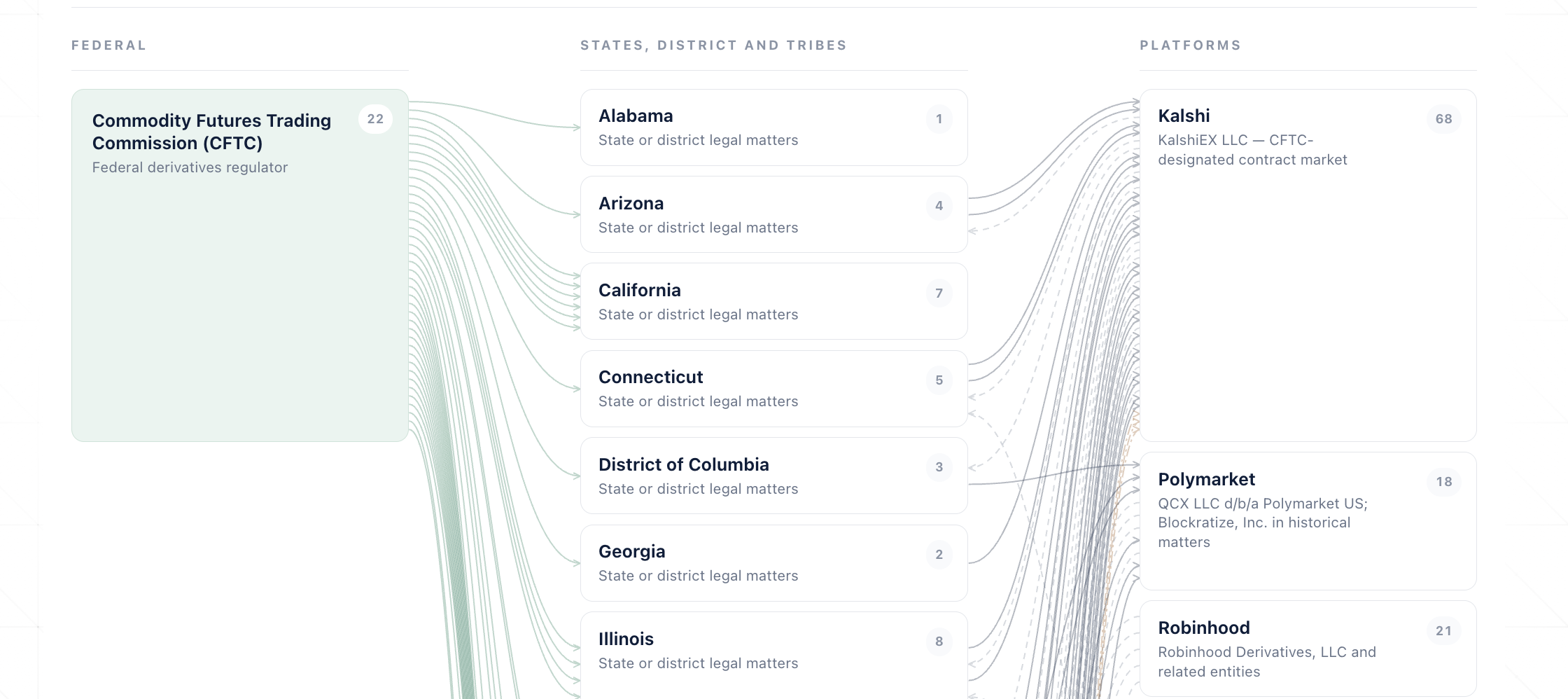
What makes this whole thing so absurd is that everyone keeps insisting they’re talking about the same product while describing it in completely different languages. One side says “event contracts,” the other side hears “sports bets,” and the courts are basically being asked to decide whether a raccoon in a tie is still a raccoon. The tracker updated August 28, 2026, and it shows the legal battle is still splintering across states, circuits, and agencies, with the central fight now sitting on a simple but gigantic question: if a market is built on guessing the outcome of sports, politics, or current events, how hard can it really be to tell what it is? Apparently, very hard — hard enough to keep lawyers employed for the foreseeable future. For bettors, traders, and everyone pretending this is a normal Tuesday, the takeaway is simple: this industry is still growing fast, but the rulebook is being written in real time, and some of the ink is coming from a court reporter with a very long day ahead. (actionnetwork.com)


The season opener is here and the early market picture looks familiar: bettors are locking tickets and the social-parlay crowd is louder than usual. Polymarket’s Week 1 snapshot (embedded below) gives one view of how a prediction market prices every game, but major U.S. books are painting the favorites a touch heavier — and that gap matters if you’re building multi-leg tickets.
What the early markets are saying
Polymarket’s graphic is a tidy way to see implied win probabilities at a glance — for the opener it shows Seattle ~62% to beat New England and San Francisco well behind the Rams in their prime-time rematch. That 62/38 split is useful, but sportsbooks have the Seahawks bigger on the moneyline: most consensus boards are pricing Seattle closer to -180 to -200, which implies roughly 64–67% chance to win. In plain terms: the books are slightly heavier on the home favorites than the prediction market, and small percentage gaps like that compound quickly when you parlay legs together.
Why that gap exists
There are three practical reasons you’ll see differences between a prediction market snapshot and a book’s moneyline:
- Liquidity and player base. Polymarket prices reflect money across its own users and traders; big U.S. books fold in far higher retail handle and early sharp tickets. That tilts consensus lines.
- Vig and pricing strategy. Sportsbooks build lines to manage risk, not to be perfect probability engines; they’ll shade favorites to balance pages when they expect heavier public action.
- Time and information. Late injury reports, contract/availability notes (watch cornerback practice reports or holdouts, for instance), travel and venue edges — sportsbooks react fast and often adjust juice or price before decentralized markets do.
Parlays: social media hype vs. market reality
If you’ve been on X/Twitter this morning you’ve probably seen multi-leg “locks” and bankroll flex posts. The typical social ticket is a six-leg moneyline that turns a few hundred dollars into several thousand — fun to share, viral to watch, and appealing to casuals. Those posts do two things for the market: they signal where retail dollars are concentrating, and they give sportsbooks a preview of which single-game outcomes will be heavily overexposed in parlays.
Why that matters for bettors: when heavy parlay volume concentrates on specific favorites (or a particular team across multiple tickets), books will either widen spreads, increase juice or pull correlated same-game parlay offers to protect their liability. The result: the public thinks a “lock” is free value, but in aggregate the house is already pricing around that behavior.
Sharp money vs. public money — an angle to watch
Line movement is where you learn who’s actually risking money. Early consensus and prediction markets are useful, but pay attention to two things before siding: sportsbooks that move quickly in response to large bets (sharp books) and the magnitude of moves. A favorite that sees its price drop from -140 to -200 into kickoff is telling you where the big risk is concentrated. Conversely, if the books barely budge while prediction markets and social posts favor an outcome, that’s often retail noise.
Correlated-leg risk and the one-parlay trap
Social parlays tend to ignore correlation: two legs that look independent to a casual bettor can be tightly linked — think multiple games affected by one weather system, or QB injury news that changes game script across markets. The more legs you add, the faster your true edge evaporates. If you insist on parlays, reduce unit size and avoid stacking legs that create single-event dependencies.
Live-betting opportunities
Week 1 creates extra live-betting edges because early-season scripts and coaching tendencies are less predictable, and markets can lag on in-game injuries or substitutions. If you’re watching for value, smaller, targeted live bets (first-quarter lines, alternate totals or player props that react to early usage) can be lower-vig ways to capture sharp information that hasn’t been fully absorbed.
Practical recommendations
- Treat Polymarket and similar snapshots as useful context, not gospel. Cross-check with a consensus board or two sportsbooks before sizing your ticket.
- Don’t let social-parlay hype drive position size — use small, fixed units for multi-leg tickets.
- Watch for line movement and trust books that move sharply; they often reflect sharp activity and can indicate where real edges are drying up.
- Avoid correlated legs in the same parlay (same-game or same-weather dependencies). If you want correlated exposure, buy single-game correlated props where the vig is lower and the correlation is explicit.
- Use live-betting selectively in the first half for value — but only if you can react fast to injury/in-game context.
Responsible gambling reminder
Bet within your means. Parlays are entertainment: they offer high upside on tiny stakes but also concentrate risk quickly. Set a bankroll, use consistent unit sizing, and don’t chase losses. If betting ever stops being fun, step away and seek help.
The takeaway
Polymarket’s Week 1 snapshot is a great quick read on crowd expectations, but for practical wagering it’s one input among many. Books are currently pricing favorites a few percentage points heavier in several marquee matchups, and social-parlay activity is amplifying public exposure in ways that will push lines and juice. If you plan to play Week 1, prioritize selective single-game edges, watch line moves for sharp signals, and keep parlay unit sizes tiny — the market is efficient enough that publicity, not skill, often wins the big payout.

 Featured2 years ago
March Tourney: Big Money ($3 Billion!)

 Sports Gambling News2 years ago
Micah Parsons Dreams of a $40 Million Contract: The Key to His Happiness!

 General Sports News2 years ago
The Biggest World Series Favorites Since the Legendary ’02 Yankees
- Featured2 years ago
New York Jets’ Hilarious Attempt to Land Mike Vrabel Ends in Patriots’ Embrace

 Sports Gambling News2 years ago
Scottie Scheffler: The Betting Favorite at The Player

 Sports Gambling News1 year ago
Marco Penge’s Epic Comeback: From Betting Ban to Euro Tour Glory!

 NFL1 year ago
Jordan Addison’s Suspension

 General Sports News1 year ago
Trevor Lawrence Stuns Patrick Mahomes in a Monday Night Showdown