Pittsburgh local
Victory Heights gives Pitt volleyball the home it earned

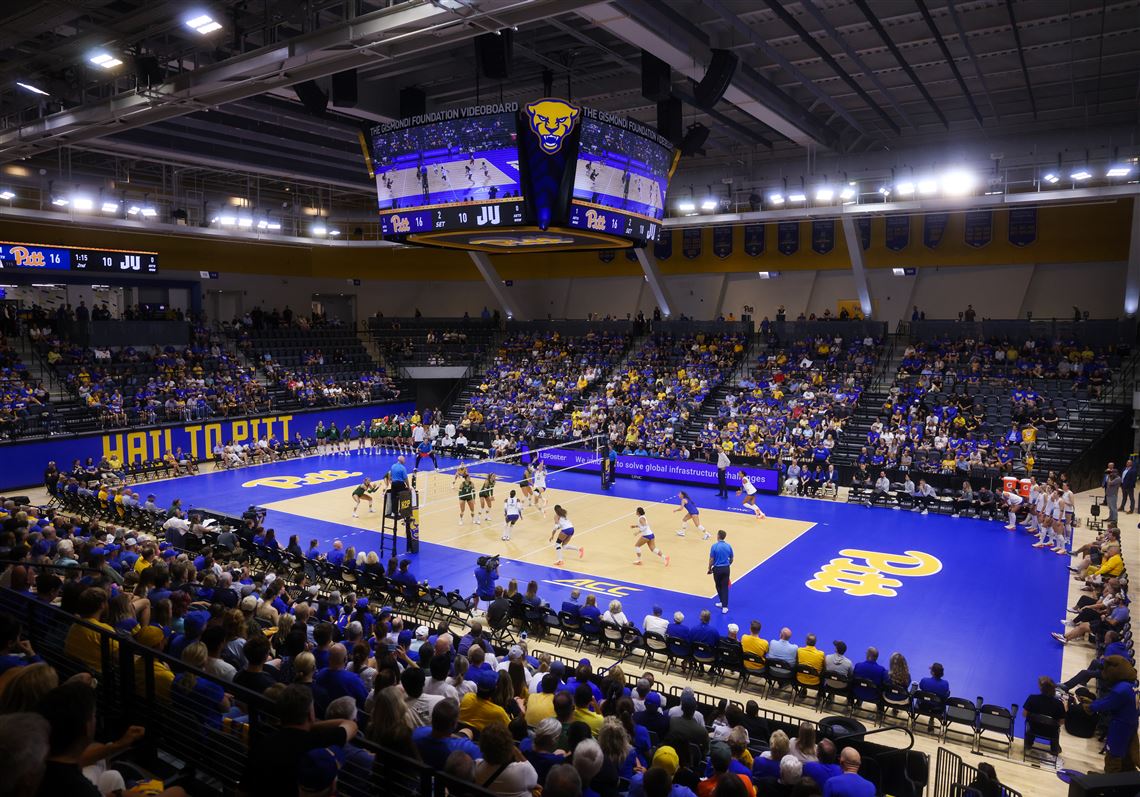
Pitt volleyball finally has the kind of home that matches the standard it has set on the court, and Victory Heights feels less like a luxury than a long-overdue piece of common sense.
The Panthers have spent years doing the hard part: winning, rebuilding, attracting attention and turning themselves into one of the nation’s premier women’s volleyball programs. So when the school unveiled a new facility built largely with that success in mind, it did not feel excessive. It felt appropriate. If anything, it felt overdue.
A reward for a program that keeps collecting trophies
There’s always a debate when a school invests heavily in non-revenue sports, especially in the era of endless spending wars and constant pressure to funnel resources toward football and men’s basketball. That conversation is fair. Budgets matter. Priorities matter. But so does evidence, and Pitt volleyball has been producing it for years.
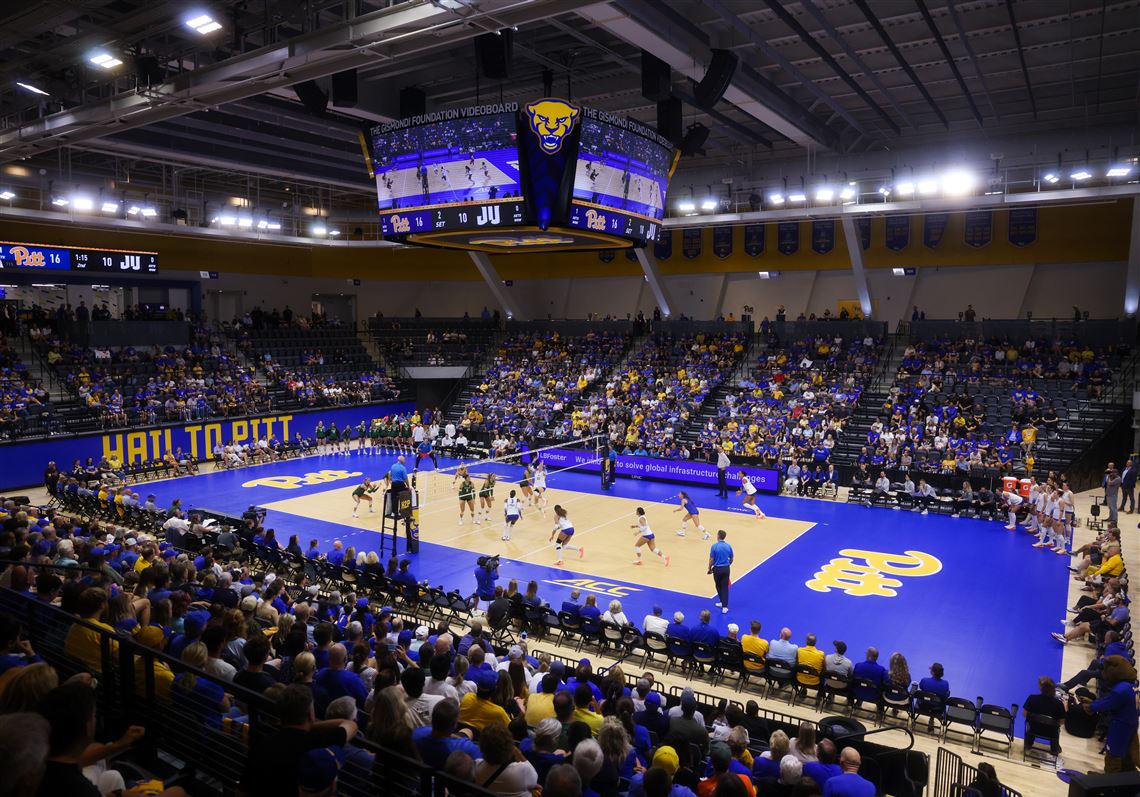
This is not a program asking for charity. It is a program that has become a national power through sustained excellence. The Panthers opened the season 8-0, carried a No. 2 national ranking and welcomed Jacksonville into a sold-out Victory Heights for the first official match in the new building. That is the definition of a program earning its own upgrade.
And make no mistake, the atmosphere mattered. A new building can look shiny in a press release. It becomes meaningful when it is full, loud and alive. Pitt fans showed up for that part, packing the place and giving the program a proper debut. That’s not just a nice scene. It’s proof that the fan base has caught up to the standard the team already set.
Why this home base matters
For Dan Fisher’s program, the new facility is about more than aesthetics. It is about infrastructure that matches ambition. It is about giving a national contender the kind of training and competition space that helps sustain a run, not just celebrate one.
That matters because Pitt volleyball is no longer trying to break through. It has already broken through. It has become one of those rare college teams that people in the city can point to without hedging, without saying “they’re pretty good” or “they’re having a nice run.” This is a winner. A consistent one. A heavyweight.
Senior Blaire Bayless captured the emotional side of it best by acknowledging how special Fitzgerald Field House was, while also recognizing what it meant to see the new place come together. That is the natural tension with any upgrade: nostalgia for the old home, excitement for the one that reflects where the program is now. Pitt managed both.
The timing also fits the moment. In modern college athletics, especially with NIL and roster retention constantly reshaping the competitive map, schools are under pressure to make hard decisions about where they invest. Pitt made one of those decisions loudly. Rather than treat volleyball as an afterthought, the university treated it like a crown jewel.
That should not be controversial anymore, if it ever really was.
The bigger message for Pitt sports
The strongest argument for Victory Heights is simple: Pitt volleyball has done more than enough to justify it. A program that wins this much, reaches Final Fours this often and keeps raising its own ceiling should not be squeezed into a space that feels like an afterthought.
There’s also a bigger lesson here for the rest of Pitt athletics. The message is not that every team needs a $240 million facility. The message is that success should count for something. If a team wins at the level Pitt volleyball has won, it should receive support that reflects that achievement.
That’s especially true in a city that absolutely knows how to reward a winner. Pittsburgh is not sentimental about mediocrity. It respects production. Pitt volleyball has produced at an elite level, and now it finally has the kind of home that says so out loud.
The debut against Jacksonville was a clean first step, but the real value of Victory Heights will come over time. It will show up when better opponents arrive. It will show up in recruiting. It will show up in practice reps, player development and the sense that the program’s future is being built in a place worthy of its past.
For now, though, the takeaway is pretty simple: Pitt volleyball earned this. The building fits the program. The program fits the city. And Victory Heights looks like the beginning of a new chapter for a team that already wrote a pretty good first book.


West Virginia’s offense has spent most of 2026 moving at full speed, and Cam Cook has been the player making sure the engine does not seize up.
The senior running back reached 1,072 rushing yards in the Mountaineers’ 53-48 loss at Texas Tech on November 7, becoming West Virginia’s first 1,000-yard rusher since Leddie Brown in 2021. The milestone arrived in a game that looked less like a football contest and more like a scoreboard operator’s endurance test, but Cook’s performance was anything but cosmetic: 149 rushing yards on 23 carries, a 6.5-yard average, and a third-quarter touchdown that briefly helped WVU seize control.
With three regular-season games remaining, Cook is no longer simply having a productive season. He is the central piece of what West Virginia wants to be.
A workload that matches the identity
Cook has carried the ball 209 times for 1,072 yards, averaging 5.13 yards per attempt with eight rushing touchdowns. That workload matters because West Virginia is not asking him to sprinkle in a few early-down carries before turning the offense over to quarterback Michael Hawkins Jr. The Mountaineers are building around him.
Through nine games, WVU ranks among the nation’s most productive rushing teams, averaging 263.6 yards on the ground. Hawkins makes the attack difficult to defend because he can punish a defense with his legs, but Cook gives the offense its downhill foundation. One player stresses the edge and the quarterback keeps the backside defender nervous; Cook attacks the middle and forces everyone else to deal with the consequences.
That is the basic problem West Virginia creates. Defenses cannot comfortably sell out against Hawkins because Cook is capable of turning a normal inside run into a 20-yard problem. They also cannot stack the box recklessly because Hawkins has enough speed and passing ability to make the secondary pay.
Cook’s production is particularly valuable because it has not depended on one unusual hot streak. He ran for 193 yards against Oklahoma State, produced 90 yards against TCU, and then posted 149 against Texas Tech. Even in a loss at Lubbock, he remained the most reliable source of offensive consistency on the field for the Mountaineers.
The Texas Tech performance also showed the difference between good individual production and winning football. Cook averaged 6.5 yards per carry and scored, yet West Virginia still lost after allowing the Red Raiders to rally in the fourth quarter. The Mountaineers finished with 582 total yards, but their final five possessions produced minus-5 yards, including a sequence that allowed Texas Tech to close the game.
That is not an indictment of Cook. It is the larger challenge facing West Virginia: the offense can generate explosive numbers, but it cannot afford to waste the possessions that make those numbers matter.
Why Pitt would have to start with Cook
There is one important schedule correction to make. West Virginia and Pitt do not play a football Backyard Brawl during the 2026 regular season. WVU’s remaining schedule includes Kansas, Houston and Utah, while the next scheduled football meetings with Pitt begin in 2029.
That means Cook will not be carrying this season’s production directly into a November rivalry game against the Panthers. Still, if the Backyard Brawl returns to the schedule as planned, Cook’s 2026 season offers a useful scouting report for what Pitt—or any future opponent—would have to solve.
The first priority would be preventing efficient early-down runs. Cook’s value is not limited to long touchdowns. He keeps West Virginia ahead of the chains, turns manageable situations into favorable ones and makes Hawkins far more dangerous on the next snap. A defense that allows Cook to reach the second level consistently will eventually face a choice it does not want: bring extra help into the box and expose itself to Hawkins, or stay disciplined and let Cook keep grinding away.
Pitt would also have to account for Cook as a receiver. His rushing totals are the headline, but he has contributed in the passing game as well, including a 13-yard touchdown reception in the win over TCU. That sort of involvement makes him more than a handoff specialist. He can be part of the answer when defenses successfully clog the running lanes.
The key is not simply tackling Cook. It is tackling him before the play becomes structurally dangerous. Once he gets downhill, West Virginia’s offense has already accomplished much of what it wants.
The bigger picture in Morgantown
Cook’s 1,072 yards are also a snapshot of the larger transformation under Rich Rodriguez. West Virginia has become aggressive, productive and occasionally chaotic. The Mountaineers are averaging 37.2 points per game and rank near the top of the country in rushing, but their defensive struggles have forced the offense to operate with very little margin for error.
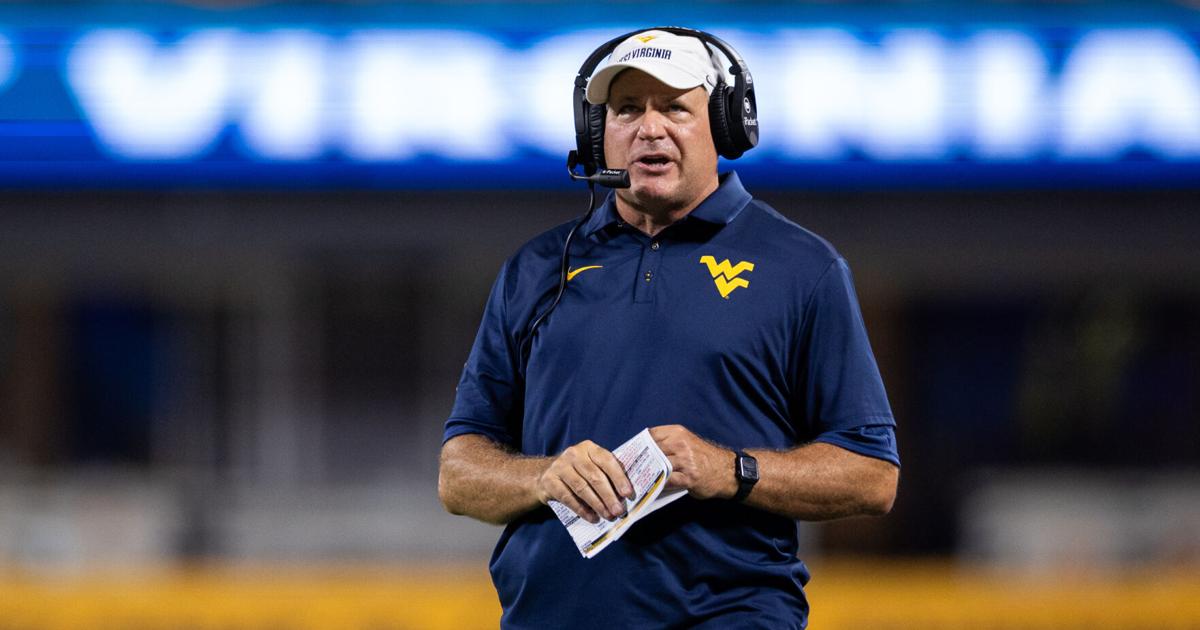
That makes Cook’s role even more important. He is not just producing statistics in a balanced offense. He is helping keep the entire operation pointed toward its preferred style: physical runs, quarterback movement, explosive plays and constant pressure on the defense.
The remaining games will determine how high Cook climbs on West Virginia’s single-season rushing list. He needs 74 more yards to move into the school’s top 15, where Adrian Murrell currently sits with 1,145 yards from 1992. That is a realistic target with three games left, especially if Cook continues receiving the kind of workload he has handled all season.
The more important takeaway, however, is simpler. West Virginia found its offensive identity in Cook’s legs. The Mountaineers may not always win the track meet, and they certainly have not solved every problem on the other side of the ball, but they have a running back capable of making every opponent defend the same uncomfortable truth:
If Cam Cook gets rolling, West Virginia’s offense becomes very difficult to slow down—and even harder to predict.
Pitt’s final home football game of 2026 is arriving under Friday-night lights at Acrisure Stadium, but it is not the Backyard Brawl.
The Panthers will host Florida State on Friday, November 13, at 7 p.m. ET for Senior Night. Pitt enters the game 6-3 overall and 6-3 in the ACC, while the Seminoles arrive at 4-5 overall and 2-4 in conference play. It is a meaningful late-season matchup for both programs, just not the rivalry game some recent messaging might suggest.
The next football Backyard Brawl is scheduled for September 8, 2029, when Pitt hosts West Virginia in Pittsburgh.
The actual meaning behind “Last one at home”
Pitt’s “Last one at home” message is straightforward: Florida State is the Panthers’ final regular-season home opponent in 2026.
The game also doubles as Senior Night, giving the evening the kind of emotional weight that usually comes with a home finale. Pitt has gone 5-1 at Acrisure Stadium this season, and a victory would give the Panthers their sixth home win while pushing them to seven wins overall.
That makes the Florida State game important on its own terms. Pitt is bowl eligible after a 34-11 victory over Georgia Tech, and the Panthers have built much of their 2026 identity around a strong home defense. Through five home wins, Pitt has allowed opponents to score only 66 total points, an average of 11 per game, while holding each of those five opponents to 14 points or fewer.
The Seminoles are a familiar ACC opponent, too. Pitt leads the all-time series 7-5 and won last year’s meeting in Tallahassee, 34-31. A second straight win would give the Panthers consecutive victories over Florida State and their first home win against the Seminoles since 1983.
There is plenty on the table before anyone needs to drag the Backyard Brawl into the conversation.
West Virginia is preparing for Kansas
West Virginia’s late-season buildup is happening in a different place and against a different opponent.
The Mountaineers are scheduled to host Kansas on Saturday, November 14, at 5:30 p.m. ET at Milan Puskar Stadium in Morgantown. The game is part of Heroes Day and Mountaineer Week, and it comes with West Virginia sitting at 5-4 overall and 2-4 in Big 12 play.
Kansas is not a placeholder on the schedule. It is a conference game with direct implications for how the Mountaineers finish the season, and West Virginia still has Houston waiting at home the following week before closing the regular season at Utah.
That is the context for West Virginia’s “The Work Continues” theme. It is about keeping the season moving through the final stretch, not signaling an imminent trip to Pittsburgh or a surprise return of the Brawl.
College football’s schedule can be chaotic enough without turning two separate late-season messages into one rivalry teaser. In this case, the geography, opponents and dates all point in different directions: Pitt is in Pittsburgh against Florida State, and West Virginia is in Morgantown against Kansas.
The Brawl is coming back — just not yet
That clarification should not diminish the actual Backyard Brawl. The rivalry remains one of college football’s most personal regional matchups, and the most recent football meeting gave everyone a useful reminder of why.
West Virginia defeated Pitt 31-24 in overtime on September 13, 2025, in Morgantown. The Mountaineers rallied from a 10-point deficit in the fourth quarter before winning on Tye Edwards’ overtime touchdown run. It was West Virginia’s second consecutive victory in the football series after Pitt won the first three games of the recent renewal.
The schools are scheduled to play four more times from 2029 through 2032. Pitt will host the 2029 and 2031 meetings, while West Virginia will host the 2030 and 2032 games. The next chapter begins in Pittsburgh on September 8, 2029.
That date may feel far away to fans who would happily play the Brawl every Saturday until the stadiums ran out of seats, but the wait is part of the modern reality of the rivalry. Pitt is in the ACC. West Virginia is in the Big 12. Conference schedules now dictate far more than regional common sense ever did.
Still, the rivalry is secure. The next time these programs meet in football, nobody will need to decode a social-media caption to understand the stakes.
For now, Pitt’s immediate assignment is Florida State on Friday night, with Senior Night, a strong home record and a chance to reach seven wins. West Virginia’s is Kansas on Saturday afternoon, with conference positioning and the final home stretch in view.
The Backyard Brawl is alive. It is simply waiting until September 8, 2029 to start another argument.
Slippery Rock spent Saturday night doing what it has done all season: piling up points, surviving whatever the weather threw at it and making the Division II playoff picture more complicated for everyone else.
The Rock closed the regular season with a 50-17 victory over Edinboro on Nov. 7, finishing 10-0 overall and 7-0 in Pennsylvania State Athletic Conference West play. Two days later, the NCAA’s updated Power Index still had Slippery Rock ranked No. 1 in Super Region One and No. 2 nationally.
That is more than a flattering number beside the school’s name. In the first season using the NCAA Power Index to help determine the Division II postseason field, Slippery Rock has put itself in position where one final game can strengthen an already compelling résumé rather than rescue it.
The ranking reflects more than an unbeaten record
The NPI is designed to measure results and schedule strength, not simply count wins. That distinction matters because Slippery Rock’s path to 10-0 has included victories over quality opponents such as East Stroudsburg and Minnesota Duluth, along with wins against California and Indiana in the PSAC.
The Rock briefly held the No. 1 national position in the index before Ferris State moved ahead. Slippery Rock’s current No. 2 national standing and No. 1 regional position show that the team remains in excellent shape entering the final weekend of the regular season across Division II.
The regional ranking is the number that matters most immediately. Super Region One includes the PSAC, Mountain East Conference, Central Intercollegiate Athletic Association and Northeast 10 Conference. Slippery Rock sits atop that group, ahead of East Stroudsburg, Kutztown and several other teams still competing for postseason position.
An unbeaten record gets attention. An unbeaten record paired with strong wins and a favorable NPI profile gets playoff leverage.
That leverage is not the same thing as a guaranteed championship run. Division II’s postseason field will not be officially announced until the NCAA Selection Show on Nov. 15. But Slippery Rock has reached the point where the conversation is no longer about whether it belongs in the field. The conversation is about seeding, matchups and how high the ceiling might be.
DaOne Owens gives the résumé a quarterback-sized headline
The player making the biggest personal statement at the right time is quarterback DaOne Owens.
Against Edinboro, Owens completed 25 of 31 passes for 325 yards, four touchdowns and no interceptions. He added 71 rushing yards on nine carries, finishing with 396 total yards and four touchdowns in the 50-17 win.
The conditions made the performance even more impressive. High winds, rain and temperatures in the 30s created the sort of afternoon when quarterbacks usually spend as much time fighting the elements as the defense. Owens instead produced one of the best games of his career while keeping Slippery Rock’s offense on schedule.
The final numbers tell the story, but the distribution matters just as much. Owens was efficient, explosive and careful with the football. He did not need to turn every drive into a deep-ball contest. Slippery Rock moved the ball through the air, ran effectively and finished with 540 total yards while committing no turnovers.
That combination is a major reason the Rock has been so difficult to slow down. Opponents cannot simply load the box against the running game or sit back and wait for Owens to make a mistake. The quarterback has shown he can punish either approach.
His PSAC West Offensive Athlete of the Week award was Owens’ second conference weekly honor this season. More importantly, it recognized the larger role he has played in one of the country’s most productive offenses.
Entering the PSAC Championship Game, Owens led the conference in passing yards, touchdown passes, completion percentage, passer efficiency rating and total offense. He had accumulated 2,394 passing yards, 25 touchdown passes and 3,063 total yards.
Those are not empty numbers built on frantic volume. Owens has been the operating system for an offense that entered the final week ranked No. 1 nationally in scoring offense and total offense. When the game became uncomfortable against Edinboro, he made it look routine.
One more test before the bracket arrives
The next challenge is not a casual victory lap. Slippery Rock will host East Stroudsburg in the PSAC Championship Game on Saturday, Nov. 14.
That matchup carries obvious conference stakes, but it also gives the Rock one last opportunity to improve its postseason case. East Stroudsburg is one of the strongest teams in the region and already owns a place near the top of the national conversation. A win would give Slippery Rock another high-value result immediately before the NCAA announces the playoff field.
There is also a practical matter of maintaining the standard that has carried the Rock this far. Slippery Rock has been explosive all season, but its best performances have come when the offense and defense have worked together. Against Edinboro, the defense held the Fighting Scots to one rushing yard and fewer than 60 total yards in the first half. The offense then answered every brief momentum swing, including a third-quarter Edinboro push that cut the lead to 21-10.
That response may be the most encouraging detail of all. Great teams are not defined only by how they start games they expect to win. They are defined by how quickly they erase the moment when the opponent starts believing.
Slippery Rock did that with a 75-yard touchdown drive, then added 22 fourth-quarter points. The final score looked comfortable because the Rock made the uncomfortable stretch disappear.
Now the stakes rise. The NPI has placed Slippery Rock exactly where it wants to be, Owens has emerged as one of the region’s most important offensive players, and the schedule has one final high-level test waiting in the wings.
The takeaway is simple: Slippery Rock is no longer merely protecting an unbeaten record. It is building the kind of postseason profile that makes the rest of Division II pay attention. If the Rock handles East Stroudsburg, the playoff bracket will not be wondering whether Slippery Rock is ready. It will be wondering who wants to draw them.

 Featured2 years ago
March Tourney: Big Money ($3 Billion!)

 Sports Gambling News2 years ago
Micah Parsons Dreams of a $40 Million Contract: The Key to His Happiness!

 General Sports News2 years ago
The Biggest World Series Favorites Since the Legendary ’02 Yankees
- Featured2 years ago
New York Jets’ Hilarious Attempt to Land Mike Vrabel Ends in Patriots’ Embrace

 Sports Gambling News2 years ago
Scottie Scheffler: The Betting Favorite at The Player

 Sports Gambling News2 years ago
Marco Penge’s Epic Comeback: From Betting Ban to Euro Tour Glory!

 NFL1 year ago
Jordan Addison’s Suspension

 General Sports News1 year ago
Trevor Lawrence Stuns Patrick Mahomes in a Monday Night Showdown