Steelers
Steelers Nation Reaches a New Level of Skepticism as the Standard Starts Looking Like a Moving Truck


Pittsburgh has always had a very clear idea of what Steelers football is supposed to look like: hard-nosed, disciplined, annoying to play against, and just competent enough to make everyone else in the AFC hate it. Lately, though, the franchise has been operating with the kind of vibe you usually get from a team that lost its playbook in a moving box and is now trying to win games with vibes, tradition, and a half-open trade spreadsheet. The frustration is not about one blown rep or one unlucky afternoon. It is about the growing sense that too many of the big-picture moves — from roster construction to the coaching transition — have left the Steelers looking like a proud old heavyweight trying to throw combinations in dress shoes.

That is why the temperature around Omar Khan and the new setup feels a little different now. In Pittsburgh, “job for life” is usually a comforting phrase for front-office stability; this week, it sounded more like the football version of a lifetime subscription you forgot to cancel. The team still has the kind of brand equity that makes every bad stretch feel like a civic inconvenience, but the standards have not changed just because the results have. When a franchise spends decades selling itself as football royalty, it cannot suddenly act like an Uber driver who is surprised by the destination. The takeaway is simple: the Steelers do not need a total identity reset, but they do need enough traction to stop making every offseason move and every coaching wrinkle feel like a postgame emergency.


Mike Tomlin has spent most of 2026 doing something unfamiliar: watching NFL games without having to win them.
That freedom has made him a valuable voice on NBC’s football coverage, but it has not erased the question that follows him everywhere. Will he coach again?
On Wednesday, November 11, Tomlin was asked whether he would entertain interest in returning to the sideline for the 2027 season. His answer was careful, unsurprising and just vague enough to keep the NFL’s rumor machine humming.
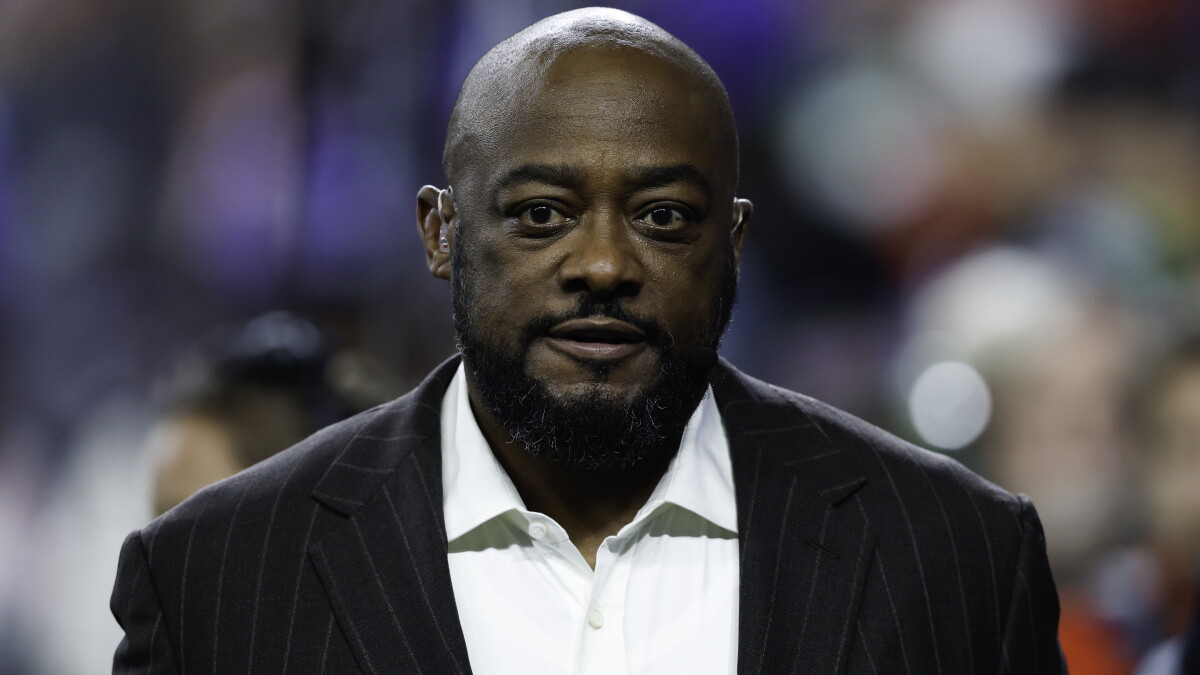
He said he had not given coaching “one iota of thought,” added that the subject would probably come up in the not-too-distant future, and said he would “cross that bridge” when he reached it.
That is not a comeback announcement. It is not a rejection, either. It is the verbal equivalent of leaving a light on in a room nobody is currently using.
What Tomlin actually said
The important detail is that Tomlin was discussing the possibility of coaching again generally, not announcing a return to the Pittsburgh Steelers or identifying a potential landing spot.
He did not say he was negotiating with another team. He did not say he had received an offer. He did not give a timetable for making a decision. Most importantly, he did not suggest that he is already planning to leave his NBC role after one season.
Tomlin’s answer came during an NBC Sports conference call connected to his new broadcasting job. He explained that he is enjoying the chance to study the league from a wider perspective and improve each week as an analyst.
That makes sense. Coaching forces a person to live inside one team’s schedule, one building and one weekly crisis. Broadcasting gives Tomlin access to the entire league. He can watch different systems, evaluate different quarterbacks and discuss the decisions that coaches make without having to prepare for a locker room meeting at 6 a.m.
For a coach who spent 19 seasons carrying the Steelers’ operation, that change probably feels less like retirement than like finally being allowed to sit in the top row and see the whole field.
Why the answer matters anyway
Tomlin stepped down as Pittsburgh’s head coach on January 13, 2026, ending a 19-season run that included a Super Bowl victory, another Super Bowl appearance and 13 playoff trips. The Steelers also finished every one of his seasons without a losing record, an extraordinary streak that became one of the defining facts of his tenure.
He is no longer employed as Pittsburgh’s coach, and the Steelers have moved forward with Mike McCarthy. That point matters because Tomlin’s latest comments are about a future return to coaching, not an unresolved situation in Pittsburgh.
Still, the answer drew attention because Tomlin remains one of the most accomplished and recognizable coaches in the league. A coach with his résumé does not need to campaign for a job. If he decides he wants to return, teams will already know where to find him.
That is the leverage behind the vagueness. Tomlin can wait. He does not have to jump at the first opening, accept a rebuilding project without the right quarterback or walk into an organization that lacks ownership support. The market will likely come to him, and he can decide whether any particular opportunity is worth giving up the freedom he has now.
The temptation for outsiders is to turn every carefully chosen sentence into a clue. That is how a simple answer becomes a coaching carousel before Thanksgiving. But Tomlin’s words do not support that leap. They support something much narrower: he expects the question to become more relevant eventually, but he is not spending his current days planning the next job.
The clearest takeaway
Tomlin’s response is best understood as an open door with no appointment scheduled.
He is enjoying his NBC role. He is not ruling out coaching again. He is not confirming interest in any team, and there is no reported agreement or active team-specific negotiation attached to his comments.
That combination is enough to keep his name near the top of every future coaching conversation, but not enough to predict where—or whether—he will coach next.
For now, Tomlin gets to do something he rarely had time to do in Pittsburgh: enjoy football as a football person. He can analyze the game, sharpen his broadcasting voice and observe the league without having every observation tied to his own team’s record.
Eventually, an owner may make the bridge in front of him look awfully appealing. Maybe the quarterback is right. Maybe the organization is stable. Maybe the money is impossible to ignore. Until then, Tomlin’s message is refreshingly simple: the future can wait its turn.
And in a league that treats every pause as a breaking-news alert, that may be the most definitive answer available.

The Steelers’ pursuit of Aaron Rodgers in 2025 apparently included one of the most recognizable Pittsburgh ingredients: a veteran leader saying exactly what he thought, and Mike Tomlin immediately trying to stop him from saying anything else.
Tomlin recently recalled an “unpleasant phone conversation” with Cam Heyward during the team’s recruitment of Rodgers. The former Steelers head coach was trying to build a personal relationship with the veteran quarterback while Rodgers weighed whether to continue his career. Heyward, meanwhile, had publicly offered a blunt message that was impossible to miss: Rodgers either wanted to be in Pittsburgh or he did not.
That did not land well with Tomlin.
“Hey bro, shut your mouth,” Tomlin recalled telling Heyward. “What are you doing? Man, shut your mouth. I’m working over here.”
It is a remarkably honest story, but it also says something important about how Pittsburgh landed Rodgers in the first place. The Steelers were not simply selling a roster, a city or a one-year football opportunity. Tomlin believed the process required patience, trust and a little less public noise—three things that are not always easy to find when a future Hall of Fame quarterback is deciding whether to keep playing.
Tomlin wanted Rodgers to see something different
Rodgers’ decision was never going to be treated like a routine free-agent visit. By that point in his career, he had already experienced years of intense attention, changing expectations and plenty of people eager to attach themselves to his next move.
Tomlin said he wanted Heyward to view the situation from Rodgers’ perspective. Rodgers had “walked in his shoes” for a long time, Tomlin explained, and had dealt with plenty of “fast friends” and short-lived relationships built around the quarterback’s fame.
That was the danger in turning the recruitment into a public campaign. Every enthusiastic quote could sound less like genuine interest and more like pressure. Every attempt to force a decision could make Pittsburgh feel like another organization trying to win the moment instead of understand the person.
Tomlin’s approach was more deliberate. He said he was not interested in pressing Rodgers. He wanted to get to know him.
Heyward’s comment may have been made with the best intentions, but from Tomlin’s perspective, it risked undermining the entire pitch. The Steelers coach was trying to create a quiet, authentic connection. His captain had effectively grabbed a microphone and turned the situation into a referendum on Rodgers’ commitment.
That is how a recruiting effort becomes a group project nobody asked for.

Heyward’s message still mattered
It would be easy to paint the episode as Heyward simply getting in the way. That would miss the larger point. Heyward was not an outsider looking for attention. He was a longtime captain, one of the most respected players in franchise history and someone who understood what Pittsburgh needed from its quarterback.
His message came from urgency. The Steelers had spent years searching for stability at the position, and Rodgers represented a potentially transformative addition. Heyward wanted clarity. Tomlin wanted patience. Both were trying to help, but they were operating on completely different clocks.
Heyward later acknowledged that he tried to reach Rodgers by text. Rodgers did not immediately respond, and when he eventually appeared on Heyward’s podcast, he admitted the comments had hurt because they felt like a public statement rather than a direct conversation.
That exchange added another layer to the story. Rodgers did not simply shrug off the comment as locker-room banter. He noticed the difference between someone speaking about him and someone speaking with him.
Still, the tension did not permanently damage the relationship. Rodgers ultimately signed with Pittsburgh in June 2025, giving the Steelers the veteran quarterback they had been pursuing. The move reunited Rodgers with a team that believed it could compete immediately and gave Pittsburgh a chance to turn a long-running quarterback search into something tangible.
The payoff was bigger than the argument
Rodgers went on to throw for 3,322 yards and 24 touchdowns during his first season with the Steelers, helping Pittsburgh win the AFC North before the year ended with a 30-6 playoff loss to Houston. The results did not produce the deep postseason run the franchise wanted, but the signing itself validated Tomlin’s patience.
More importantly, Tomlin and Rodgers appeared to form a genuine bond. When Tomlin stepped down after the season, Rodgers reportedly took the decision hard. Rodgers later said he still had enormous appreciation for Tomlin and credited him with bringing him to Pittsburgh.
That makes the Heyward story more revealing than explosive. It was not evidence of a broken locker room or a lasting feud. It was a glimpse at the competing personalities involved in a complicated recruitment: one captain demanding certainty, one coach protecting a fragile relationship and one quarterback trying to determine whether he still wanted football at all.
Tomlin’s message to Heyward was profane, direct and completely on brand. He was not asking his captain to stop caring. He was asking him to stop talking long enough for the work to happen.
In the end, it did. Rodgers became a Steeler, Heyward and Rodgers eventually cleared the air, and Tomlin’s carefully managed pitch made it across the finish line. Sometimes the biggest free-agent signings are built through grand presentations and polished salesmanship. In Pittsburgh, this one apparently required a coach to tell his own captain to get out of the way for five minutes.

Pittsburgh reached the NFL trade deadline with a 6-2 record, a four-game winning streak and an obvious question hanging over the offense: who is going to consistently win outside for Aaron Rodgers?
The Steelers answered that question by doing nothing.
Tuesday’s 4 p.m. deadline passed without Pittsburgh adding a player at wide receiver—or anywhere else. The roster that entered the deadline is the roster the Steelers will take into the second half of the season, including the same receiver group that has already been tested by injuries, uneven production and too much responsibility placed on too few players.
That decision is not automatically indefensible. But it is difficult to call it comfortable.
The need was real, even if the perfect solution was not
The Steelers did not enter the deadline desperate for a superstar. They entered it needing more reliable depth and another player capable of creating separation when defenses focus on DK Metcalf and the tight ends.
Pittsburgh’s initial 2026 depth chart featured Metcalf, Michael Pittman Jr. and Roman Wilson as the starting wideouts, with Germie Bernard and Ben Skowronek among the primary backups. That looked reasonable on paper. In practice, the group has been disrupted by injuries almost from the beginning.

Pittman has appeared in only three games and has been on injured reserve. Wilson has dealt with a dislocated finger, while Skowronek has missed time with a calf injury. Bernard has been asked to handle a larger role than originally expected, and Metcalf has had to carry the profile of a No. 1 receiver without consistently producing like one.
Through eight games, Metcalf had 33 catches for 378 yards and one touchdown. His catch rate, according to Steelers offensive charting, was just 51.6 percent. Those numbers do not mean Metcalf is useless; they do mean Pittsburgh could not reasonably assume that every passing problem would solve itself simply because he was on the roster.
The Steelers also had legitimate alternatives in front of them. Josh Downs, a receiver frequently linked to Pittsburgh, was traded to Kansas City. Brian Thomas Jr. remained with Jacksonville, while other more ambitious possibilities never became realistic. The receiver market was not overflowing with clean solutions, and Pittsburgh apparently did not want to pay a premium for a player who might only modestly improve the offense.
That is the strongest argument for standing pat: a bad trade would have created a different kind of problem.
Aaron Rodgers changes the standard
The issue is that Pittsburgh is not operating like a rebuilding team. Aaron Rodgers is here for a final-season push, and the organization has built around the idea that this is a window worth attacking now.
Rodgers brings experience, control at the line of scrimmage and enough arm talent to punish defenses that lose leverage. He does not, however, make a thin receiver room magically deeper. A quarterback can throw open a receiver only so often. At some point, someone still has to separate, finish through contact and make the difficult third-down catch.
The Steelers’ passing numbers show both the potential and the limitations of the current setup. Rodgers has been productive when the offense finds favorable matchups, but he has also faced more pressure and absorbed 23 sacks through the first eight games. Against the blitz, he has completed 45 of 76 passes for 393 yards while throwing four interceptions and taking 11 sacks.
Some of that is protection. Some is play design. Some is quarterback play. The receiver room is not responsible for every offensive problem. Still, the lack of dependable targets makes every other issue more visible. When defenses can crowd Metcalf, challenge the timing of the passing game and force Rodgers to hold the ball, Pittsburgh’s margin for error shrinks quickly.
That is why the criticism from former Steelers offensive coordinator Todd Haley carries weight. The concern is not merely that the team failed to make a splash. It is that Pittsburgh acknowledged the position was vulnerable and still chose to trust that health and internal improvement would solve it.
That is a bet. The Steelers are now committed to it.
The case for patience
There is a reasonable counterargument, and it should not be ignored just because fans wanted a transaction.
Pittsburgh may soon get reinforcements without surrendering draft capital. Skowronek is expected to return, Wilson could become eligible to return after the Bengals game, and Pittman has resumed running while working back from his injury. If those players return healthy, the receiver room could look substantially different by December than it did in October.
The offense also has a productive running-game foundation. Jaylen Warren has been outstanding through eight games, rushing for 704 yards and averaging 5.9 yards per carry. Rico Dowdle has provided a complementary presence, and Pittsburgh’s ability to run the football gives Rodgers a path to operate efficiently without throwing 40 times every week.
The Steelers are not a one-dimensional offense waiting for a trade to rescue them. They are a flawed but functional team with a strong record, a capable quarterback and enough defensive talent to stay in games.
The problem is that playoff football tends to expose the exact weaknesses that regular-season records can hide. Against elite opponents, Pittsburgh may need a receiver to win a one-on-one matchup when the play breaks down. It may need a fourth option to keep defenses from bracketing Metcalf. It may need someone other than Warren, Pat Freiermuth or a tight end in the short middle of the field to become a reliable answer.
A deadline addition was never guaranteed to provide that. But the failure to add anyone means the Steelers must now find those answers internally.
The verdict
Standing pat was defensible only because the available options were imperfect. It was not defensible because the offense suddenly stopped needing help.
Pittsburgh avoided overspending for a receiver who might not have changed its postseason ceiling. That is responsible roster management. But the team also left Rodgers with a group that has not consistently matched the ambitions attached to this season.
The next few weeks will determine whether the Steelers made a disciplined decision or simply missed an opportunity. If Pittman returns, Wilson is healthy and Bernard continues developing, the front office may look smart for refusing to force a deal. If injuries linger and Metcalf remains inconsistent, every stalled drive will revive the same question: why did Pittsburgh decide that this was good enough?
For now, the Steelers are betting on health, continuity and internal improvement. With Rodgers nearing the end of his career and the AFC North waiting ahead, that is a risky bet—but it is the one Pittsburgh chose before November 10, 2026.

 Featured2 years ago
March Tourney: Big Money ($3 Billion!)

 Sports Gambling News2 years ago
Micah Parsons Dreams of a $40 Million Contract: The Key to His Happiness!

 General Sports News2 years ago
The Biggest World Series Favorites Since the Legendary ’02 Yankees
- Featured2 years ago
New York Jets’ Hilarious Attempt to Land Mike Vrabel Ends in Patriots’ Embrace

 Sports Gambling News2 years ago
Scottie Scheffler: The Betting Favorite at The Player

 Sports Gambling News2 years ago
Marco Penge’s Epic Comeback: From Betting Ban to Euro Tour Glory!

 NFL1 year ago
Jordan Addison’s Suspension

 General Sports News1 year ago
Trevor Lawrence Stuns Patrick Mahomes in a Monday Night Showdown