Sideline Stories
Patrick Mahomes’ Dad Wins the Right to Attend Chiefs Games, Because Even Probation Has a Guest List


Patrick Mahomes’ family just added another chapter to the modern American saga of “how much paperwork does it take to watch your son play football?” Pat Mahomes Sr., who is still on probation in his DWI case, got court permission to attend some Chiefs games this season — a ruling that feels like the legal system looked at a football schedule and said, “Fine, but you’re not turning this into a full road-trip redemption tour.”
The approved arrangement is not a free pass to wander the NFL like a man with a gold lanyard and no consequences. According to the reporting, Mahomes Sr. asked to attend games in Kansas City, Las Vegas, and Cincinnati, but the judge only signed off on the majority of the Chiefs’ games. The Vegas and Cincinnati trips were denied, which means the road schedule remains less “family bonding” and more “probation officer playing defensive coordinator.” He’ll still need to follow testing requirements when he travels, and he’s already completed the community service and treatment requirements attached to the case.
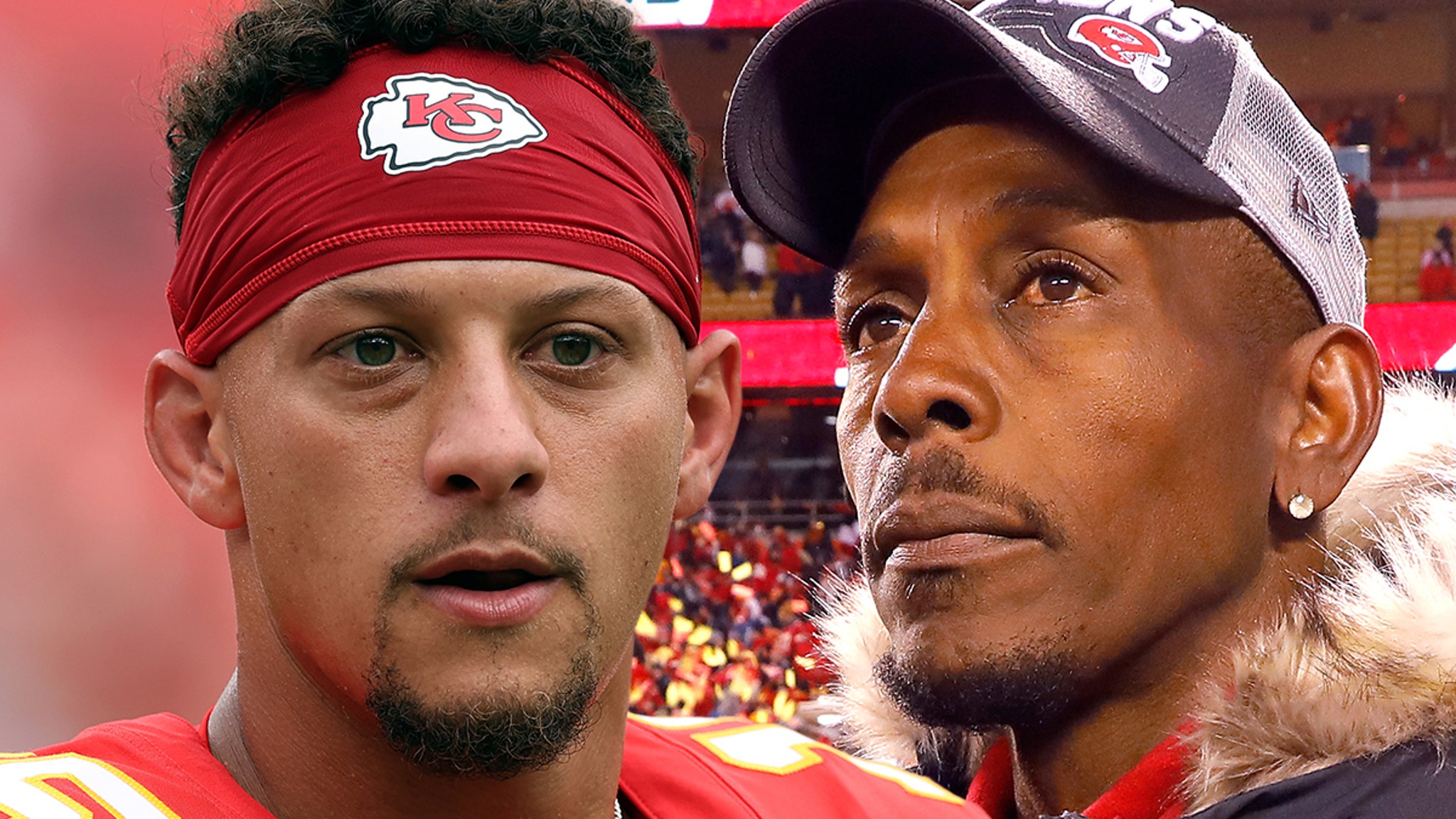
In other words, this is not a football story about Patrick Mahomes throwing lasers or the Chiefs chasing another win. It’s a very specific, very 2026 story about a famous NFL father needing court approval just to be in the building for his son’s games — and getting a ruling that basically says, “Home games only, buddy. Let’s not make this more complicated than it already is.” The Chiefs will handle the scoreboard; the court is apparently handling the itinerary.

Sideline Stories
Rex Ryan Turns Himself In After Alleged Nashville Hit-and-Run Involving Two Pedestrians

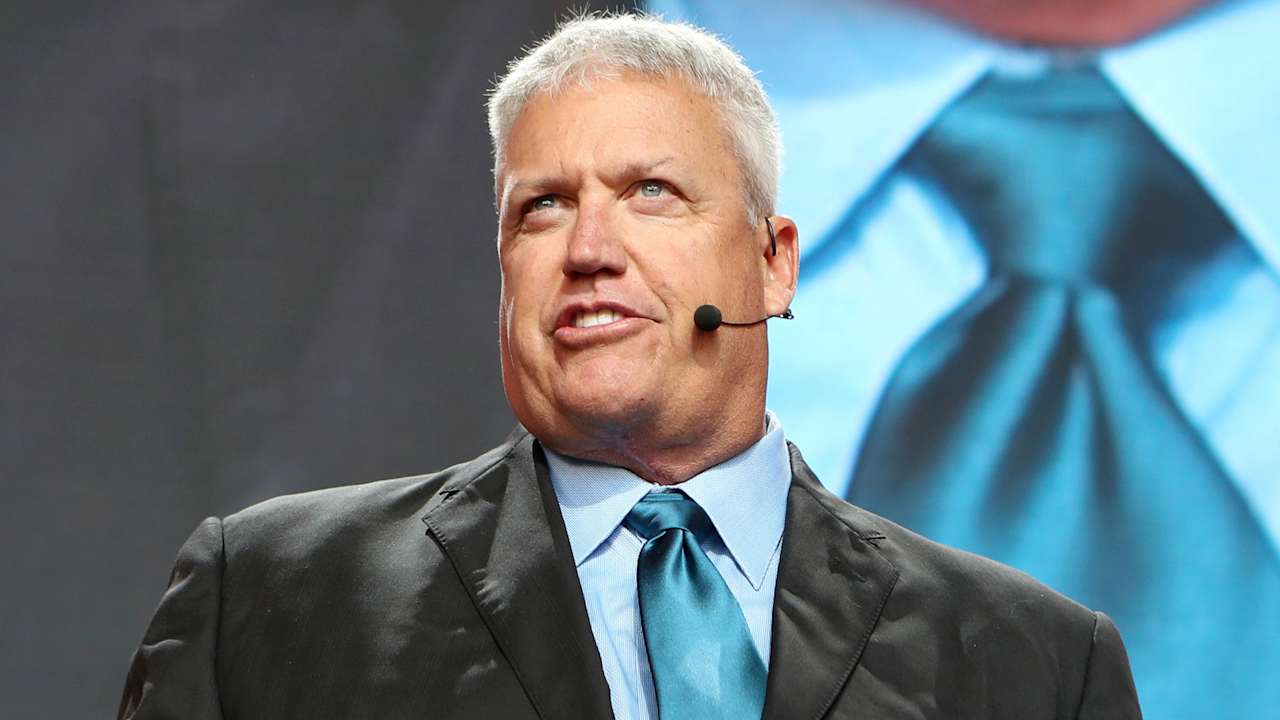
Rex Ryan spent years making football feel louder, larger and more combustible than it already was. On Wednesday, November 11, 2026, the former New York Jets and Buffalo Bills head coach found himself dealing with a very different kind of spotlight.
Ryan surrendered to Nashville police after authorities accused him of striking two pedestrians with his pickup truck in downtown Nashville the previous week, leaving the scene and failing to provide information or aid. Police said the pedestrians suffered minor injuries.
The allegations are serious, even if the details sound almost bizarrely specific: two people crossing Broadway with a walk signal, a right turn from Fourth Avenue, a truck running over both victims’ feet, an argument at the next red light and then a departure from the scene. This is not a football story dressed up as something else. It is an off-field legal matter involving a highly recognizable sports personality, and the facts still need to play out in court.
What police allege happened
According to the Metropolitan Nashville Police Department, the incident occurred shortly before midnight on Thursday, November 5, at the intersection of Fourth Avenue and Broadway, a busy area in the city’s downtown entertainment district.
Police said the pedestrians were crossing Broadway from Fourth Avenue with a walk signal when Ryan allegedly turned right and struck them. Investigators said the truck ran over both victims’ feet and made contact with one person’s leg. The pedestrians reportedly told police that the vehicle continued moving before stopping at a red light at Broadway and Representative John Lewis Way.
At that point, police said, the pedestrians waved down the driver. Authorities alleged that Ryan got out of the pickup, argued with them, returned to the vehicle and drove away. The pedestrians took photographs of the truck’s license plate and identified the driver, according to the police account.
Police described the injuries as minor. That does not erase the central allegation: the driver was required to stop, exchange information and render aid after a collision involving pedestrians. Instead, investigators say the encounter ended with the truck leaving the area.
Ryan turned himself in for booking Wednesday morning after six misdemeanor warrants were issued. A judicial commissioner set his bond at $6,000, and he was released on pretrial conditions. He is scheduled to appear in court next month.
The charges and Ryan’s status
Ryan faces two counts each of leaving the scene of an accident, failure to give information or render aid, and failure to obey a traffic-control signal. All six charges are misdemeanors.
Those charges are allegations, not convictions. Ryan is entitled to the presumption of innocence, and the police account will ultimately be tested through the court process. His attorney, David Raybin, said Ryan immediately surrendered after learning of the charges.
ESPN said it was aware of the situation and in contact with Ryan. The network analyst had appeared on ESPN programming in the days before his surrender, including the NFL pregame show and the “Get Up” morning program. His current role as a football commentator makes the legal development especially visible, but it does not change the basic standard that applies here: the case must be judged on evidence, not reputation.
That point matters because Ryan has one of the most recognizable personalities in modern NFL media. His coaching career was built partly on defensive expertise and partly on a public presence that turned press conferences into appointment viewing. He was rarely mistaken for a low-volume personality. But the traits that made him compelling on television do not provide context or excuse for an alleged traffic incident.
Why this matters beyond the headline
Ryan’s football résumé is substantial. He led the Jets to consecutive AFC Championship Game appearances after the 2009 and 2010 seasons and later coached the Bills. He has not coached since Buffalo dismissed him near the end of the 2016 season, though he remained a familiar figure through his work at ESPN and continued interest in returning to the sideline.
That history explains why the story moved quickly through the sports world. A former NFL head coach, a current analyst and one of the league’s most recognizable personalities is now facing misdemeanor charges tied to an alleged pedestrian collision. Still, the most important people in the story are the two pedestrians who police say were struck while crossing with the right of way.
The incident is also a reminder of how quickly a routine moment in a crowded downtown intersection can become a legal case. A turn at a red light, a brief confrontation and a decision to leave can produce consequences that have nothing to do with wins, losses or television appearances.
For now, the next significant step is Ryan’s court appearance. Until then, the responsible conclusion is a simple one: Nashville police have laid out a detailed allegation, Ryan has surrendered and been released, and the legal process—not the noise surrounding his football persona—will determine what happened and what comes next.

The notebook sits quietly after the game, but for Vincent Desharnais, it represents something much bigger than a few lines of reflection.
After a Washington Capitals game, the 6-foot-7 defenseman writes down what went right, what went wrong and where he can improve. The habit helps him leave the rink at the rink instead of carrying every mistake into the night.
That was not always possible.
Before journaling, Desharnais would lie awake until 2 a.m., replaying shifts, mistakes and every possible concern running through his mind. The routine was not ordinary postgame reflection. It was rumination, and it became one part of a much larger mental-health struggle that included panic attacks, anxiety and depression.
In an interview published November 8, 2026, Desharnais spoke openly about the period when he questioned why he was playing hockey at all. His story is difficult, but it is also strikingly practical: getting better did not come from one dramatic breakthrough. It came from admitting he needed help, learning tools that worked for him and accepting that mental health would remain something he had to manage rather than permanently defeat.
When hockey stopped feeling like an escape
Desharnais’ first major struggle came during his first professional season after signing with the Edmonton Oilers. He was moving between the ECHL’s Wichita Thunder and AHL’s Bakersfield Condors, recovering from a concussion and dealing with a breakup while living far from home in California.
The pressure accumulated slowly, then all at once.
Panic attacks began. His thoughts became overwhelming. He isolated himself and fell into a depression. Desharnais described spending roughly a month and a half watching the situation grow worse until he reached the point of questioning why he was there and why he was still playing hockey.
That detail matters because professional athletes are often expected to treat discomfort as background noise. A bad game is supposed to be forgotten by the next morning. A difficult season becomes a test of toughness. But Desharnais’ experience shows how easily ordinary hockey pressure can blend with personal loss, injury, loneliness and uncertainty until the sport that once provided purpose starts feeling like another source of weight.
Eventually, he reached out for help. He called that decision a major step, one that began moving him in a healthier direction.
“Everyone can struggle,” Desharnais said. “Mental health is a real thing, and it’s okay to not be okay.”

That message is simple. It is also the kind of message many people avoid saying until they are already in serious trouble.
The lowest point came years later
Desharnais eventually established himself in the NHL with Edmonton, but the anxiety did not disappear. During the 2024-25 season, after signing with Vancouver, he was traded to Pittsburgh in January and then to San Jose at the trade deadline. He barely had time to settle in before suffering a season-ending injury.
The constant movement was difficult enough. The deeper problem was that he had lost his confidence and his connection to the game.
Desharnais said he did not want to play hockey anymore. He was not having fun, felt mentally exhausted and came close to quitting. The issue, he emphasized, was not one particular team. He was struggling internally, and the sport became tangled up in that struggle.
At that crossroads, retirement was one option. Another was to examine what was happening away from the rink and try to address the root of it.
That work began with a yoga retreat and coaching from Geneviève Grandbois. Desharnais used the experience to clear his head and learn techniques that could interrupt the cycle of anxiety: deep breathing, meditation, yoga, journaling, spirituality and conversations with people he trusted.
The most important shift was not learning how to guarantee good days. It was learning to stop demanding perfection every day.
Desharnais recognized that he had been placing enormous pressure on himself in every practice and every game. A mistake was not simply a mistake. It became evidence that he had failed. Changing that mindset allowed him to separate a poor performance from his identity and his life.
That distinction can sound obvious from the outside. In professional sports, where jobs, contracts and reputations can change quickly, it is anything but easy.
A better season, and a bigger purpose
The work helped Desharnais regain his enjoyment of hockey. He still deals with anxiety, but he now has strategies for handling it. His mornings can begin with breathing exercises or meditation. His notebook gives him a place to process a game instead of replaying it endlessly. Talking to the right people keeps the problem from becoming an isolated one.
The improvement showed up on the ice. In 2025-26, Desharnais posted seven points, 103 hits, 68 penalty minutes and a plus-7 rating with San Jose. That bounce-back season helped him earn a four-year contract with Washington, offering the stability he had lacked while moving from organization to organization.
But the most meaningful part of his recovery may not be the contract or the statistics. It is the way he now views a bad night.
A poor game can still be frustrating. It can still demand an honest evaluation. But it does not have to turn into a verdict on an entire life. Desharnais has learned to ask a more useful question: How can tomorrow be better?
That perspective has also influenced the way he interacts with teammates. After a mistake, he tries to remind others that life continues beyond the result. The sun rises the next morning. Hockey matters, but it is not the only thing that matters.
That may be the clearest takeaway from Desharnais’ story. Asking for help did not make him less competitive or less committed to hockey. It helped him return to the sport with a healthier understanding of what it could be.
He hopes speaking honestly will encourage others to do the same, especially athletes who believe they are supposed to absorb every struggle in silence. His advice is direct: say something, talk to someone and do not be ashamed.
For anyone in the United States or Canada experiencing a mental-health crisis, call or text 988 for immediate support. A conversation may not solve everything, but Desharnais’ experience makes clear that keeping everything hidden can make the burden much heavier.
The notebook is still part of his routine. So are the breathing exercises, the reflection and the hard-earned reminder that one bad day does not have to define the next one. That is not just a way to play better hockey. It is a way to keep playing at all.

Anthony Richardson’s season has already been defined by uncertainty, and now it has a fresh layer of awkwardness that has nothing to do with blitz pickups or completion percentage.
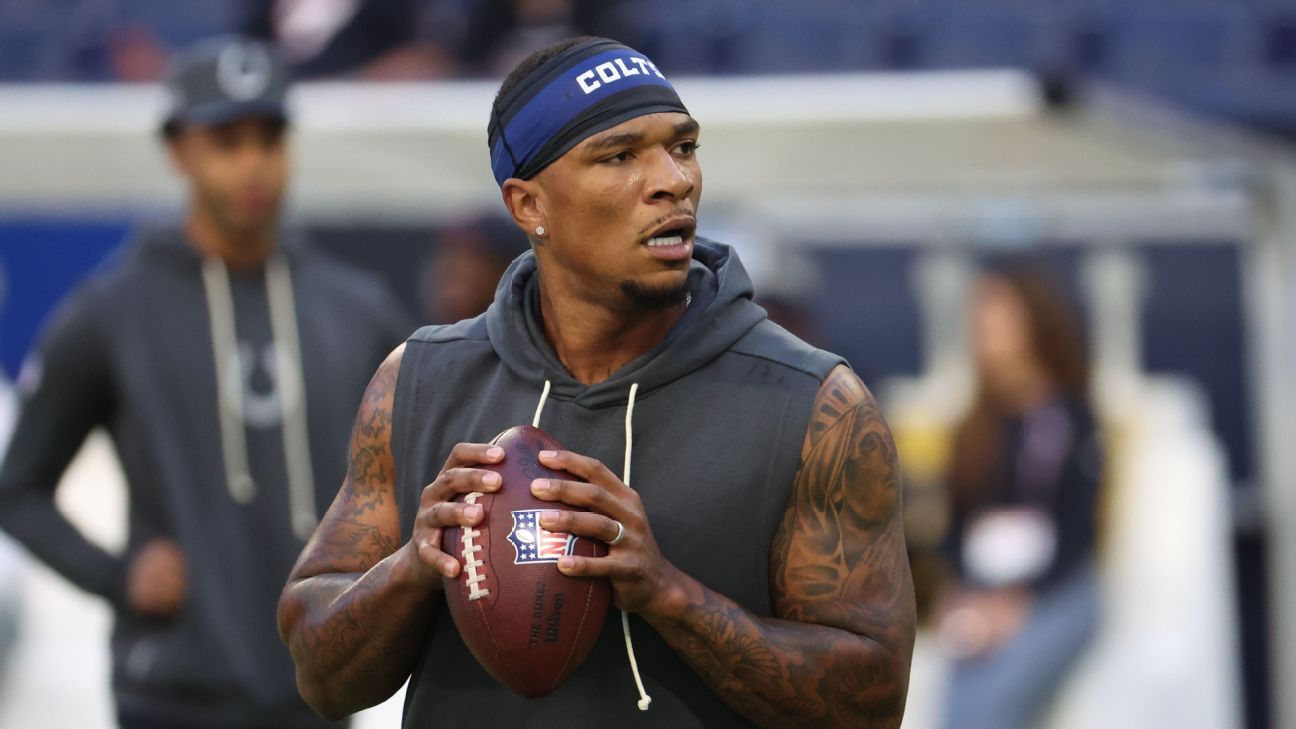
The Colts quarterback is facing a misdemeanor marijuana possession charge after a traffic stop in Indiana earlier this month, according to court records and team reporting. The stop happened on October 12 in Carmel after police said the vehicle Richardson was driving had an expired registration tag and a license plate that did not match the registration. From there, the situation moved from routine traffic enforcement to the kind of headline every team would rather never have to manage.
What happened
According to the affidavit cited in reporting, an officer approaching the vehicle smelled marijuana. Richardson reportedly acknowledged that he had been smoking marijuana inside the car because he did not want to do so around his children. Police said they found a small amount of marijuana in the vehicle, along with marijuana gummies in a Mason jar inside the glove compartment.
That is the ugly part of this story: it is not just a vague “off-field issue” or an internet rumor with a mile of guesswork attached. It is a real charge tied to a real traffic stop, and the details are the kind that turn a bad week into a very public one.
The Colts said they are aware of the situation and are gathering more information, while Richardson’s attorney declined to comment.
Why this matters for the Colts
This would be a sensitive story for any NFL quarterback. For Richardson, it lands in the middle of a career that has already been dragged around by injuries, inconsistency, and a constant fight for his place on the depth chart.
He was drafted No. 4 overall in 2023 and flashed the kind of upside that makes teams convince themselves they can solve the puzzle. But the development curve has been brutal. He played only four games as a rookie before a season-ending shoulder injury. In 2024, he started a career-high 11 games but struggled badly with accuracy and turnovers. In 2025, Daniel Jones beat him out for the starting job, and Richardson’s season was derailed again by a fractured orbital bone suffered in a bizarre locker-room accident.
Now he is dealing with another unwanted spotlight at the exact moment the Colts are already trying to steady themselves after firing longtime general manager Chris Ballard. That matters because quarterbacks do not get judged on talent alone. They get judged on reliability, maturity, and whether the organization can trust them to stop creating new distractions.
Right now, that trust is taking another hit.
The bigger problem is the timing
The most important thing here is not the charge itself in isolation. It is the timing. Richardson is already in a prove-it phase with the franchise, even if his role is currently backup rather than starter. Every story around him now tends to carry the same uncomfortable subtext: the Colts are waiting to see whether he can become the player they drafted, and Richardson keeps giving them new reasons to hesitate.
This is also the kind of situation that can linger. Legal matters do not vanish because the football calendar moves on, and the NFL has a long memory when it comes to off-field conduct. Even when nothing else happens immediately, the distraction hangs around like a bad smell in a locker room that already has enough to deal with.
The Colts are not just evaluating a quarterback. They are evaluating whether a former No. 4 pick can ever become stable enough for the job to be fully his. Incidents like this make that harder, not easier.
The takeaway
Richardson is still young, still gifted, and still capable of changing the story on the field. That part has not disappeared.
But the off-field noise is piling up, and it is now arriving at the worst possible time for a player trying to rebuild confidence from everyone around him. For the Colts, this is no longer just about talent or upside. It is about whether the organization can ever get a clear runway with a quarterback who keeps finding new ways to make the conversation more complicated than it needs to be.
At the moment, that is the real story: not just a charge, but yet another reminder that Anthony Richardson’s NFL future is still stuck between promise and problem.

 Featured2 years ago
March Tourney: Big Money ($3 Billion!)

 Sports Gambling News2 years ago
Micah Parsons Dreams of a $40 Million Contract: The Key to His Happiness!

 General Sports News2 years ago
The Biggest World Series Favorites Since the Legendary ’02 Yankees
- Featured2 years ago
New York Jets’ Hilarious Attempt to Land Mike Vrabel Ends in Patriots’ Embrace

 Sports Gambling News2 years ago
Scottie Scheffler: The Betting Favorite at The Player

 Sports Gambling News2 years ago
Marco Penge’s Epic Comeback: From Betting Ban to Euro Tour Glory!

 NFL1 year ago
Jordan Addison’s Suspension

 General Sports News1 year ago
Trevor Lawrence Stuns Patrick Mahomes in a Monday Night Showdown