Steelers
Mike McCarthy takes the blame after Steelers’ offense face-plants in Foxborough

The Steelers went to New England and somehow managed to make 20-3 feel even uglier than it sounds. You know a football afternoon is going badly when the defense actually does its job, the other team keeps handing you little opening doors, and the offense responds by walking into the wall like it pays rent there. That was the vibe in Foxborough: a Steelers team with big expectations, a shiny new play caller, and Aaron Rodgers at quarterback, yet the scoreboard looked like it had been assembled by someone who only vaguely understands how touchdowns work.
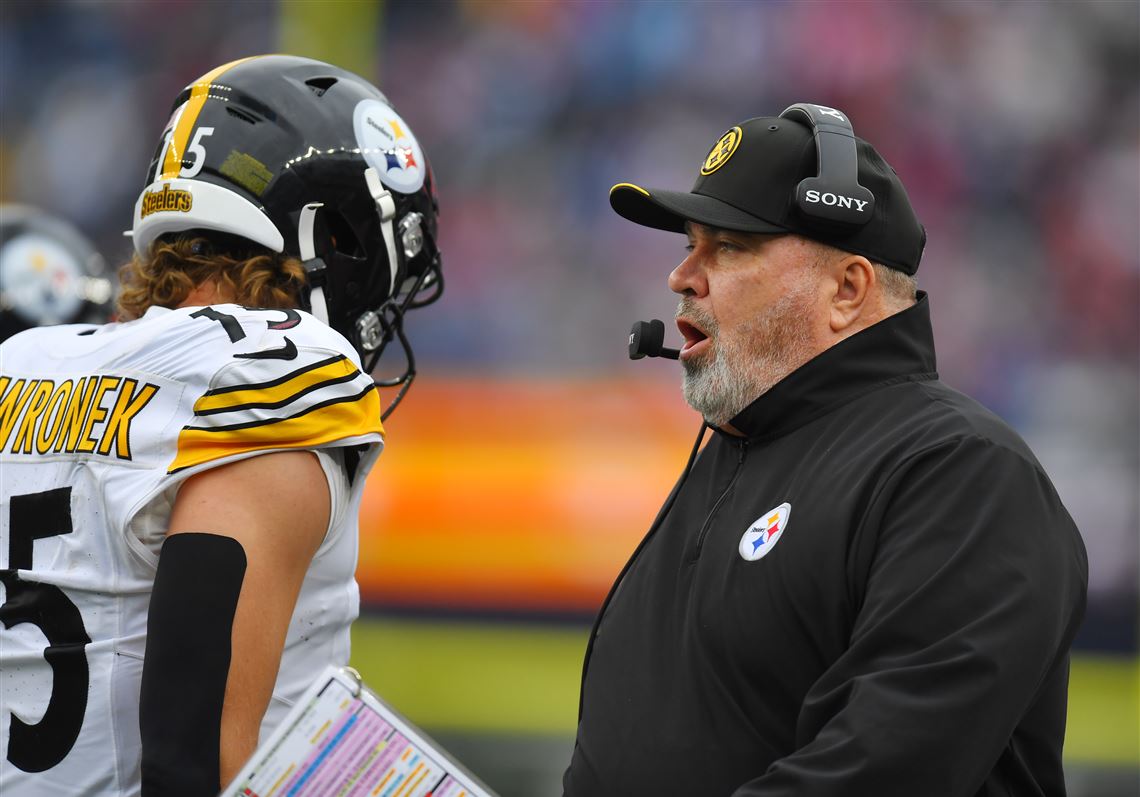
Mike McCarthy didn’t spend much time pretending this was somebody else’s mess. He owned it, which is almost refreshing because football coaches usually talk like they’re solving a nuclear issue instead of admitting the screen passes weren’t fooling anyone. The Steelers converted just 2 of 12 third downs, Rodgers was sacked four times, and the longest play all day was a modest 26-yard catch-and-run. Meanwhile, the Patriots were popping off chunk plays like they found the “easy mode” setting. That’s the part that has to make Steelers fans groan: the defense held New England to 13 points, and the offense still looked like it needed a map, a flashlight, and maybe a permission slip. If this is the “new” offense, the first two weeks have the energy of a reboot nobody asked for. The good news is McCarthy at least knows where the problem starts. The bad news is he also has to fix it before this thing turns into one of those early-season headaches that follows you all autumn like a bad group chat.


3 RIVERS SPORTS | STEELERS GAME RECAP | OCTOBER 25, 2026
An aging emperor. An unstoppable cavalry. A fortress that refused to fall. And an artillery commander who, once again, had to save everyone’s ass.
Pittsburgh Steelers 16, New Orleans Saints 10 | Stade de France, Paris
Prologue: The Emperor Crosses the Atlantic
The year was 2026.
Across the great Atlantic Ocean, an army sailed eastward. Not from the palaces of London, nor the kingdoms of Spain, but from the smoke-filled valleys of Western Pennsylvania.
They were men of iron. Men of steel. Men who had endured the brutal winters of the Alleghenies and the merciless campaigns of the AFC North.
At their head stood an aging emperor.
Aaron Rodgers.
A conqueror whose greatest victories had been won years before. His beard had grayed. His legs had slowed. His enemies whispered that his time had passed.
But the old emperor had not crossed an ocean to surrender.
Beside him stood Field Marshal Mike McCarthy, charged with directing the campaign, while the hardened commanders of Pittsburgh prepared their forces for battle.
Before them lay Paris.
And defending it, the army of New Orleans, commanded by the young General Tyler Shough. Their soldiers called themselves Saints, though the coming battle would reveal precious little divine intervention.
The Saints had claimed the French capital as their own territory.
A bold decision.
For they were an army with only two victories to their name, facing an invading force that had already conquered the distant shores of Dublin.
The Emperor surveyed the battlefield at Saint-Denis.
He raised his sword.
The drums began.
The conquest of Paris had begun.
Battle I: The Cavalry Breaks the French Lines

First Quarter — Pittsburgh 3, New Orleans 0
The Emperor’s first command was simple.
Send in the cavalry.
And from the Pittsburgh ranks emerged General Jaylen Warren, a compact, relentless commander whose soldiers did not believe in retreat.
Behind the protection of the imperial infantry, Warren thundered across the French countryside. His first great charge tore through 29 yards of enemy territory, scattering defenders who appeared wholly unprepared for the speed of the advancing force.
By the end of the first engagement, Warren had accumulated 57 yards on the ground. The French lines buckled.
Paris seemed ready to fall.
Yet as the Pittsburgh army approached the enemy’s innermost defenses, the advance inexplicably stalled.
The Emperor’s cavalry had conquered the fields. His infantry had secured the roads. His army stood at the gates.
And still, the fortress remained intact.
There was only one solution.
“Bring forward the artillery.”
From the rear emerged Marshal Chris Boswell, commander of the imperial cannons. Calm. Disciplined. Disturbingly accustomed to being summoned when the Emperor’s offensives collapsed.
His first cannon fired from 28 yards.
A direct hit.
Three points for Pittsburgh.
It was the first scoring strike in the history of the NFL’s French campaign.
Across the battlefield, the imperial soldiers celebrated.
The Emperor, however, studied the fortress walls.
A touchdown had been within reach.
His army had settled for three.
It was an ominously familiar beginning.
Battle II: The Giant at the Gates

Second Quarter — Pittsburgh 13, New Orleans 10
The second engagement brought the first true resistance.
General Shough rallied the defenders of New Orleans and led an assault against Pittsburgh’s defensive fortifications.
The imperial guard fought desperately. Commander Patrick Queen rallied his men. T.J. Watt, the feared veteran of a hundred brutal engagements, stalked the enemy’s flanks.
But the French defenders pressed forward.
Near the Pittsburgh goal line, Shough found Devaughn Vele for a one-yard touchdown strike on fourth down.
The Saints had breached the walls.
The score stood level at ten.
For the first time, the Emperor’s conquest appeared in doubt.
Rodgers summoned his commanders.
He had grown tired of watching his cavalry capture miles of territory only for the infantry to stop at the enemy’s doorstep.
This time, he would unleash something different.
A giant.
Standing 6 feet, 7 inches tall, General Darnell Washington towered over the battlefield like a siege tower given human form.
The Emperor directed his forces downfield, advancing 66 yards in seven plays. Then, from four yards outside the fortress, Rodgers launched his assault.
Washington rose above the defenders, battling through the desperate resistance of Kool-Aid McKinstry.
He seized the ball.
He secured his footing.
The gates of Paris had been breached.
For one glorious moment, the Pittsburgh army remembered that touchdowns were, in fact, permitted under the rules of war.
Yet the Saints refused to yield. They had already struck earlier in the quarter, and the battle remained dangerously close.
With the final seconds of the half slipping away, Boswell was once again summoned.
The artillery officer hurried into position.
A 47-yard cannon shot.
Another direct hit.
The Pittsburgh army withdrew to its encampment holding a narrow 13–10 advantage.
The Emperor had conquered the first half.
But the enemy was still alive.
And the bloodiest engagement was yet to come.
Battle III: The Imperial Guard’s Finest Hour

Third Quarter — Pittsburgh 16, New Orleans 10
The third engagement began under darkening skies.
The Saints, battered but unbroken, gathered their remaining forces for a decisive counteroffensive.
General Shough led his army forward with patience and precision. Fourteen successive maneuvers carried the defenders 68 yards across the battlefield, consuming more than seven minutes.
The Pittsburgh infantry bent.
The defensive lines retreated.
The enemy advanced to within ten yards of the imperial stronghold.
A single strike could give New Orleans command of the battlefield.
The Emperor watched from afar.
His soldiers had been pushed to the edge of disaster.
But among the imperial guard stood a young commander whose courage had already become the subject of military legend.
Commander Payton Wilson.
As Shough prepared to deliver the decisive blow, Wilson abandoned his position and lunged into the path of the enemy’s projectile.
He seized it from the air.
An interception.
The French offensive had been destroyed.
Wilson rose and carried the captured standard another 18 yards, weaving through the stunned enemy ranks as the Pittsburgh army erupted.
The Saints had spent 14 plays marching toward glory.
Wilson had ruined the entire expedition in approximately two seconds.
Such is the cruelty of war.
The Emperor, inspired by his commander’s heroism, immediately ordered a counterattack.
His soldiers advanced into enemy territory.
And then, with the consistency of a military tradition nobody particularly enjoyed, the offensive stalled.
Again.
The Emperor stared toward the enemy fortress.
His commanders avoided eye contact.
Somewhere in the distance, a familiar artillery officer began preparing his equipment.
Boswell.
Thirty-eight yards.
Three more points.
The imperial army now commanded a 16–10 advantage.
Commander Wilson had saved the campaign, and the Emperor had rewarded his bravery with a field goal.
History would remember the interception.
The offensive coordinator would presumably prefer that nobody remember what happened afterward.
Battle IV: The Last Stand at Saint-Denis

Fourth Quarter — Pittsburgh 16, New Orleans 10
The final engagement would not be decided by a magnificent cavalry charge.
Nor by a brilliant maneuver from the Emperor.
It would be decided by the men who had spent the afternoon standing between Pittsburgh and humiliation.
The Imperial Guard.
With their army trailing by six, the Saints launched their remaining forces into battle.
But the Pittsburgh defense had transformed the battlefield into a graveyard for French ambition.
General Patrick Queen, commanding the defensive infantry, led the resistance with ten tackles. Keeanu Benton smashed through enemy formations, while the feared T.J. Watt continued to terrorize the opposing command.
Then, with just over six minutes remaining, Queen delivered another crushing blow.
On third-and-ten, he charged through the enemy’s protection and brought General Shough crashing to the earth.
A sack.
The Saints were forced to retreat.
From the stands came a thunderous chant.
Here we go, Steelers!
It echoed through Saint-Denis, carried by the thousands of Pittsburgh loyalists who had crossed the ocean to witness the campaign.
The French capital had become an outpost of Western Pennsylvania.
And the enemy’s ground forces had been rendered almost completely useless.
Throughout the entire battle, New Orleans managed a miserable 18 rushing yards.
Eighteen.
Napoleon once conquered much of continental Europe with armies that marched thousands of miles.
The Saints couldn’t manage twenty yards on the ground.
Meanwhile, General Warren finished with 101 rushing yards, supported by Rico Dowdle and the imperial infantry. Pittsburgh controlled the trenches, protected its narrow advantage, and gradually drained the remaining life from the enemy.
There would be no final glorious touchdown.
No spectacular destruction of the French defenses.
Only the steady, merciless strangulation of an opposing army that could no longer advance.
The Emperor had come to Paris seeking victory.
And victory was what he would take.
When the final cannon sounded, the scoreboard declared the conquest complete.
THE FINAL DISPATCH FROM PARIS
Pittsburgh Steelers – 16
New Orleans Saints – 10
Epilogue: The Emperor’s Dispatch
On the evening of October 25, 2026, the imperial scribes recorded the results of the French campaign.
The Pittsburgh army had secured its fifth victory of the season against two defeats.
Its cavalry had rushed for 150 yards before the ceremonial kneeling that concluded the battle.
General Warren had led the ground assault with 101 rushing yards, while Emperor Rodgers completed 19 of 30 aerial strikes for 212 yards and one touchdown.
Commander Wilson had saved the army from near-certain disaster.
Marshal Boswell had struck three times with deadly accuracy.
And the defensive infantry had reduced the Saints’ ground campaign to a pathetic 18 yards.
The conquest was complete.

Pittsburgh Steelers+1
Yet historians would later debate the greatness of the victory.
Some would point to Pittsburgh’s dominance in the trenches, its ten successful third-down conversions, and its ability to overcome a determined enemy on foreign soil.
Others would observe that the Emperor’s army had scored only one touchdown against a two-win opponent and required three separate artillery strikes to secure a six-point victory.
Both accounts would be correct.
For the Pittsburgh Empire had never promised beauty.
It had promised conquest.
And as the aging Emperor departed Paris, his commanders gathered around him, awaiting his final words.
Rodgers surveyed the battlefield.
The wounded. The exhausted. The victorious.
Then he turned toward his artillery commander.
“Boswell.”
“Yes, sire?”
“Make certain you travel with us on the next campaign.”
And so the Pittsburgh army sailed westward, its banners raised, its record improved, and its enemies left to ponder what had transpired.
Paris had fallen.
The Emperor had prevailed.
And somewhere in Western Pennsylvania, an entire population wondered why the hell scoring a touchdown had to be so difficult.
Vive l’Empereur. Vive les Steelers.
Steelers
Steelers Nation turns Paris black and gold as fans flood the city for the NFL’s latest overseas showcase

Paris is supposed to be the City of Light, but this weekend it looks a lot more like the City of Black and Gold.
Steelers fans have poured into Paris ahead of Pittsburgh’s international game, turning sidewalks, cafes and tourist-heavy corners of the French capital into an outpost of Steelers Nation. Jerseys, Terrible Towels and team gear have become as much a part of the scenery as the Eiffel Tower and the Seine. For a franchise with one of the NFL’s most loyal followings, the sight is about as surprising as it is satisfying: if the Steelers are in town, their people are going to show up.
A traveling fan base does what it does best
The most striking part of a scene like this isn’t just the number of fans. It’s the confidence. Steelers supporters do not travel like tourists trying to blend in. They travel like a moving block of black and gold that expects to be noticed. In Paris, that meant fans gathering around the team’s trip and turning random stretches of the city into a temporary home base for Pittsburgh football.
That’s the fun of these overseas games. They are never just about the matchup on the field. They become a full-city export of a team’s identity. Pittsburgh fans have a reputation for showing up in force wherever the schedule sends them, and Paris seems to have offered the perfect stage: iconic backdrop, global spotlight and a fan base that treats distance like a minor inconvenience.

For anyone who has spent time around Steelers road games, the atmosphere probably feels familiar. There’s always a pocket of fans ready to act like every neutral location is suddenly Heinz Field West. The only difference here is that the backdrop is not a parking lot on the North Shore. It’s one of the most recognizable cities in the world.
The hunt for a true football bar
There is also a more practical side to the story, and it may be the most relatable one for any traveling sports fan: finding a place to actually watch the game.
Reporting from Paris found that American football remains a niche attraction in the city, even at a moment when the Steelers are drawing attention there. One Paris bar visited as part of the search had the look of a standard sports pub, but soccer was still the main event on the TVs. Other stops were even less promising, with some places barely aware that Pittsburgh and New Orleans were set to play in town. In other words, the black-and-gold invasion may be visible in the streets, but it is not yet completely baked into the local bar culture.
Still, there were signs of progress. A few spots in the city have begun to develop small but steady NFL followings, and some bars are now drawing modest Sunday crowds that can swell during the playoffs. That may not sound like much to an American football fan used to wall-to-wall coverage and packed viewing parties, but in Paris, that is how a foothold starts: one bar, a few dozen fans, and a growing appetite for something beyond the usual football.
Why this matters for Steelers fans
This is the part Steelers fans should enjoy. Not because Paris suddenly belongs to Pittsburgh, but because the travel footprint says something real about the franchise. The Steelers are not just playing an international game; they are exporting a fan culture that knows how to travel, organize and make itself impossible to ignore.
That matters in a league that increasingly treats global games like proof of concept. You can stage the event, sell the merchandise and light up the broadcast in every time zone. But the atmosphere is built by the people who actually show up. In Paris, the Steelers have those people. Plenty of them.
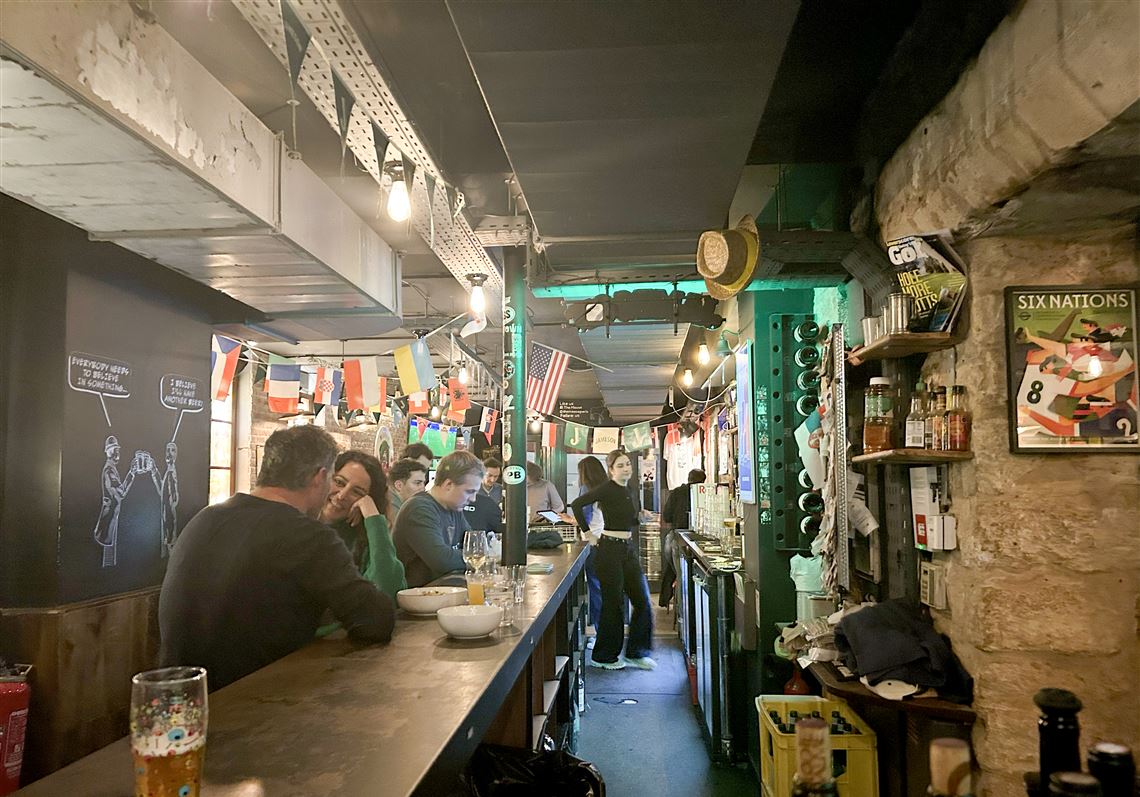
And that’s what makes the scene more than a nice photo op. It’s evidence that the NFL’s overseas push can feel authentic when the right fan base gets involved. A city famous for style, history and a little bit of swagger has been asked to host one of football’s most recognizable brands, and Steelers Nation has responded the way it always does: by showing up loudly, looking unified and refusing to be subtle about it.
For Pittsburgh, that’s a familiar kind of export. The city sends out steel, sandwiches, tradition and sports fans who will happily turn another continent into a road trip. In Paris, the result is simple: the City of Light has picked up a lot more black and gold.
And if the Steelers keep traveling like this, the next time they cross the Atlantic, finding a proper football bar may not be the hard part anymore. The hard part may be finding one with room left.

Aaron Rodgers didn’t need much help to become the central character of the Steelers’ Paris week. One day after arriving late with his team, he was already driving the conversation in three different directions: the travel plan, the NFL’s handling of a medical issue involving Jalen Hurts, and the money behind women’s flag football. That is a lot of airtime for any quarterback. For Rodgers, it was basically a warm-up.
What makes this stretch so interesting is that all three topics are bigger than one press conference answer. They all point to the same thing: Rodgers is not just Pittsburgh’s starting quarterback, he is the loudest, most recognizable voice attached to the Steelers on one of the NFL’s most visible international stages. When he talks, it doesn’t stay in the room. It becomes part of the week.
The Paris travel gripe was about more than jet lag
The first thread was the one Steelers fans could probably relate to immediately: the travel schedule. Rodgers made it clear he would have preferred the team to get to Paris earlier, saying he has now played in three countries and that his teams had always left on Thursday evening. His point was simple — a Monday arrival would have been better.
That may sound like the kind of small complaint every tired athlete has after a long flight, but it matters because the Steelers are walking into a game where routine has already been blown up. International weeks are never normal. Sleep is off, practice time is compressed, and every detail gets magnified. Rodgers has lived through enough of this to know that when a team chooses the later arrival, it is making a tradeoff. The quarterback was not exactly pretending otherwise.

That’s part of why his comment landed. He wasn’t raging or sounding alarmist. He was basically saying, in veteran-quarterback language, that he would have chosen the safer, calmer option. And when the player saying it is Aaron Rodgers, the reaction is going to be louder than if it came from almost anyone else on the roster.
Rodgers also widened the frame
The Paris travel comment might have been the cleanest football takeaway, but Rodgers did not stop there. He also weighed in on the NFL’s handling of the Jalen Hurts situation, saying he doesn’t know enough about the specifics but that he has never seen eye-to-eye with the league’s lead medical person, so he was not surprised by how the issue played out.
That is classic Rodgers territory: part quarterback fraternity, part institutional criticism, part “I’ve been around long enough to have opinions about how this works.” He made sure to say he does not have a close relationship with Hurts and does not want to see anything like that happen to a player still in the game. But the larger point was unmistakable. Rodgers was skeptical of how the league handles medical decisions, and he said so plainly.
That kind of comment always travels fast because it touches a nerve beyond one specific case. Players listen to a veteran like Rodgers when he talks about safety and trust, especially when it involves a quarterback. It also keeps the NFL in the center of the frame on a week when the league would much rather be selling Paris as a glamour event and a global showcase.
The flag football point felt bigger than the moment
Rodgers then shifted again, this time to the rise of flag football and the pay for women on the national flag football team. He called the growth of the sport excellent, but said the pay is “very scant” and not equal, adding that he is not a big fan of that setup. He also said there should be better pay for some of those athletes.
That comment widened the lens even further. Suddenly this was not just a Steelers quarterback talking about a travel schedule before an international game. It was a player with a massive platform making the conversation about women’s sports, compensation, and whether the sport’s expanding popularity is being matched by fair treatment for the athletes involved.
Again, Rodgers being Rodgers is the story. He has never acted like a scripted spokesman, and this was no different. But the substance matters too. It is one thing for a player to say flag football is growing. It is another to point out, in public and without much hedging, that the people helping grow it may not be getting paid fairly.
Why it matters for the Steelers
All of this lands on the Steelers at exactly the wrong, or right, time depending on your appetite for chaos. They are in Paris for a high-profile game, trying to stay locked in, trying to manage the usual international-week weirdness, and trying to avoid letting the off-field noise become the story.
Rodgers is making that difficult — not in a bad way, necessarily, but in a very Rodgers way. He is the sort of quarterback who can turn a routine media availability into a broader football discussion, then veer into league policy and athlete compensation without losing the room. That is useful if you want a star who can command attention. It is trickier if you want a quiet, low-drama week.
The Steelers do not have that kind of week. They have Rodgers, and Rodgers has opinions.
That can be a headache, but it can also be an edge. A veteran quarterback who is comfortable saying what he thinks can set the emotional temperature for a team, especially on the road, especially overseas, especially when everybody is a little out of rhythm. Whether you agree with him or not, he has made sure the Steelers’ Paris trip feels bigger than a flight and a football game.
And maybe that is the real takeaway. In a week that should have been about adjusting to time zones and preparing for Sunday, Rodgers turned the trip into a much larger conversation about how football is managed, marketed, and financed. For better or worse, that is what happens when Aaron Rodgers is in the middle of your story.

 Featured2 years ago
March Tourney: Big Money ($3 Billion!)

 Sports Gambling News2 years ago
Micah Parsons Dreams of a $40 Million Contract: The Key to His Happiness!

 General Sports News2 years ago
The Biggest World Series Favorites Since the Legendary ’02 Yankees
- Featured2 years ago
New York Jets’ Hilarious Attempt to Land Mike Vrabel Ends in Patriots’ Embrace

 Sports Gambling News2 years ago
Scottie Scheffler: The Betting Favorite at The Player

 Sports Gambling News2 years ago
Marco Penge’s Epic Comeback: From Betting Ban to Euro Tour Glory!

 NFL1 year ago
Jordan Addison’s Suspension

 General Sports News1 year ago
Trevor Lawrence Stuns Patrick Mahomes in a Monday Night Showdown