Sideline Stories
Jon Jones and Colby Covington Turn Old Dorm-Room Energy Into a Full-Time Job


Jon Jones and Colby Covington have apparently decided that the real main event is not a fight night, but a never-ending pop quiz in the art of being insufferable. After Covington suggested that Gable Steveson should get away from Jones because of all that allegedly bad energy, Jones fired right back and did what elite combat sports rivalries do best: turn one interview quote into a full-scale hostage negotiation with the timeline.
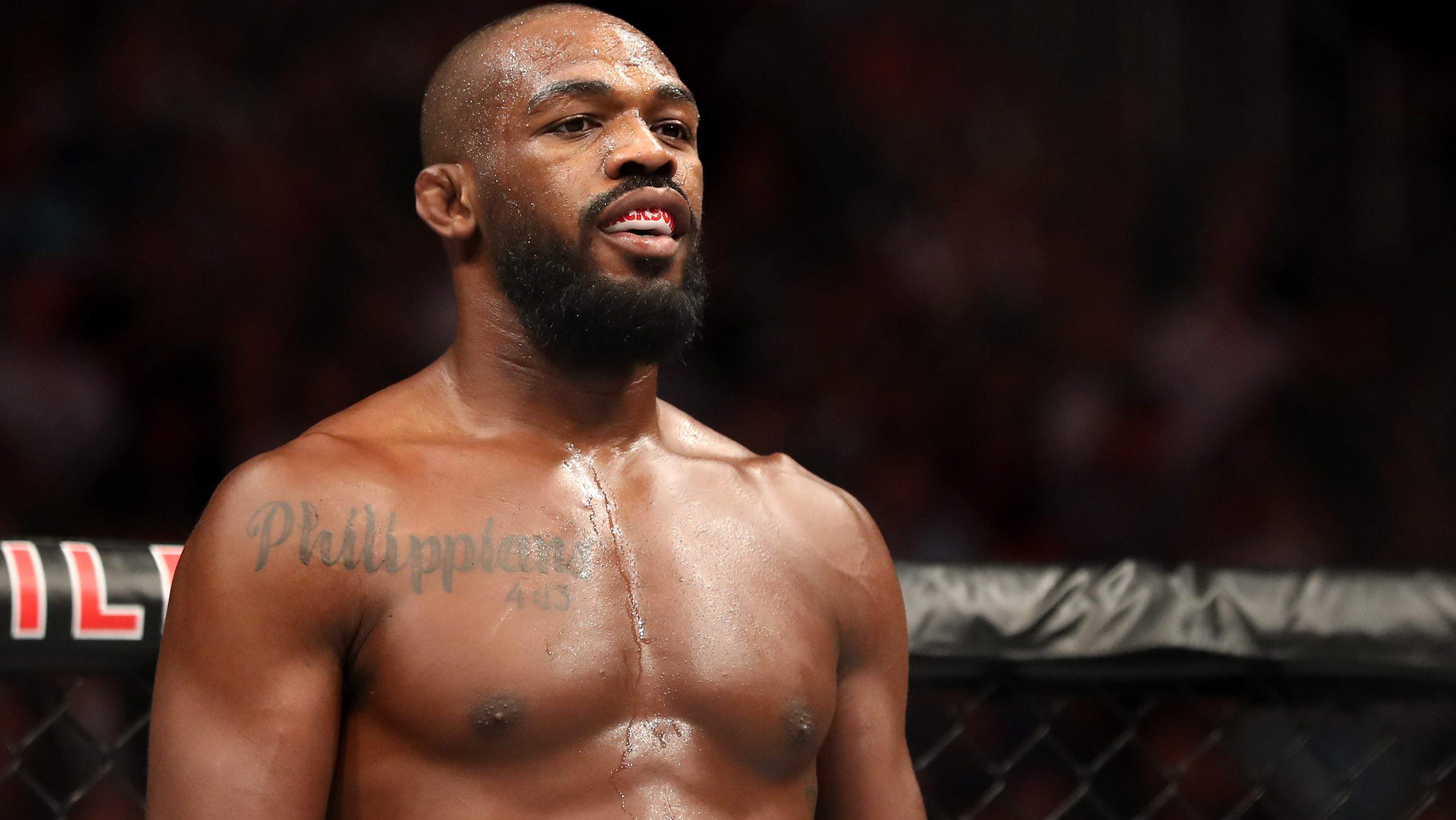
Jones’ response was classic Jones—part brag sheet, part roast, part reminder that he and Covington once shared college housing and apparently came away from it with very different life plans. He mocked Covington for blaming Steveson’s loss on “negative energy,” pointed out that he’s still undefeated, and basically argued that if anyone should be handing out spiritual advice, it probably shouldn’t be the guy who keeps volunteering for a verbal head kick every few months. That alone would have been enough, but Jones added the cherry on top by reminding Covington that Kamaru Usman, not Jones, is the one who wrecked his face in the Octagon. The message was simple: if you’re going to build your whole personality around hating me, at least bring the right mugshot of the rivalry.
The funny part is that neither man seems willing to retire from this feud, which means the sport’s most exhausting roommate dispute lives on as a premium cable product. Covington keeps talking, Jones keeps swatting the comments away like they’re flyweights, and somewhere in the middle Gable Steveson has to hear two grown men argue about “energy” like they’re trying to settle a bill in a dorm kitchenette. At this point, the only thing more predictable than the trash talk is that both men will act shocked when the other one responds. In MMA, that’s called strategy. In normal life, it’s called never moving on from freshman year.


Anthony Richardson’s season has already been defined by uncertainty, and now it has a fresh layer of awkwardness that has nothing to do with blitz pickups or completion percentage.
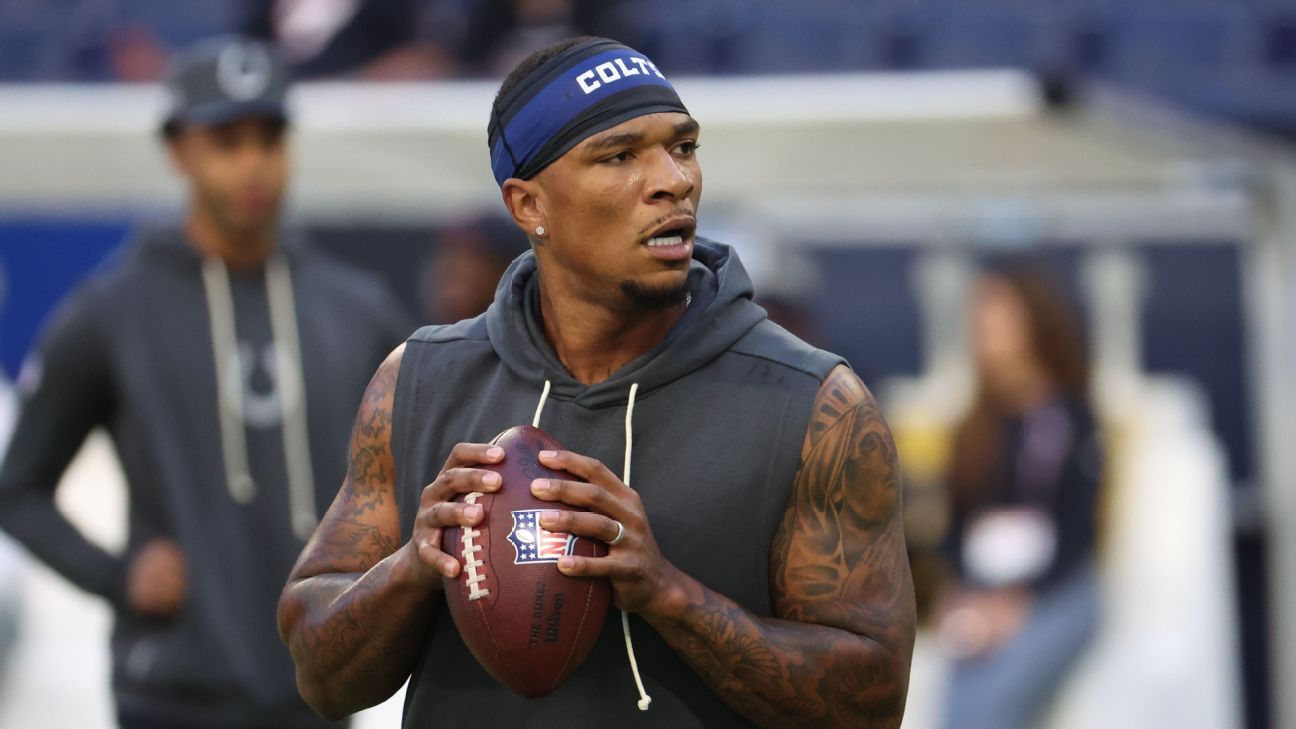
The Colts quarterback is facing a misdemeanor marijuana possession charge after a traffic stop in Indiana earlier this month, according to court records and team reporting. The stop happened on October 12 in Carmel after police said the vehicle Richardson was driving had an expired registration tag and a license plate that did not match the registration. From there, the situation moved from routine traffic enforcement to the kind of headline every team would rather never have to manage.
What happened
According to the affidavit cited in reporting, an officer approaching the vehicle smelled marijuana. Richardson reportedly acknowledged that he had been smoking marijuana inside the car because he did not want to do so around his children. Police said they found a small amount of marijuana in the vehicle, along with marijuana gummies in a Mason jar inside the glove compartment.
That is the ugly part of this story: it is not just a vague “off-field issue” or an internet rumor with a mile of guesswork attached. It is a real charge tied to a real traffic stop, and the details are the kind that turn a bad week into a very public one.
The Colts said they are aware of the situation and are gathering more information, while Richardson’s attorney declined to comment.
Why this matters for the Colts
This would be a sensitive story for any NFL quarterback. For Richardson, it lands in the middle of a career that has already been dragged around by injuries, inconsistency, and a constant fight for his place on the depth chart.
He was drafted No. 4 overall in 2023 and flashed the kind of upside that makes teams convince themselves they can solve the puzzle. But the development curve has been brutal. He played only four games as a rookie before a season-ending shoulder injury. In 2024, he started a career-high 11 games but struggled badly with accuracy and turnovers. In 2025, Daniel Jones beat him out for the starting job, and Richardson’s season was derailed again by a fractured orbital bone suffered in a bizarre locker-room accident.
Now he is dealing with another unwanted spotlight at the exact moment the Colts are already trying to steady themselves after firing longtime general manager Chris Ballard. That matters because quarterbacks do not get judged on talent alone. They get judged on reliability, maturity, and whether the organization can trust them to stop creating new distractions.
Right now, that trust is taking another hit.
The bigger problem is the timing
The most important thing here is not the charge itself in isolation. It is the timing. Richardson is already in a prove-it phase with the franchise, even if his role is currently backup rather than starter. Every story around him now tends to carry the same uncomfortable subtext: the Colts are waiting to see whether he can become the player they drafted, and Richardson keeps giving them new reasons to hesitate.
This is also the kind of situation that can linger. Legal matters do not vanish because the football calendar moves on, and the NFL has a long memory when it comes to off-field conduct. Even when nothing else happens immediately, the distraction hangs around like a bad smell in a locker room that already has enough to deal with.
The Colts are not just evaluating a quarterback. They are evaluating whether a former No. 4 pick can ever become stable enough for the job to be fully his. Incidents like this make that harder, not easier.
The takeaway
Richardson is still young, still gifted, and still capable of changing the story on the field. That part has not disappeared.
But the off-field noise is piling up, and it is now arriving at the worst possible time for a player trying to rebuild confidence from everyone around him. For the Colts, this is no longer just about talent or upside. It is about whether the organization can ever get a clear runway with a quarterback who keeps finding new ways to make the conversation more complicated than it needs to be.
At the moment, that is the real story: not just a charge, but yet another reminder that Anthony Richardson’s NFL future is still stuck between promise and problem.
Sideline Stories
Marshall Faulk’s Parkinson’s diagnosis turns a football icon’s next chapter into something much bigger

Marshall Faulk has spent most of his life making the hard things look easy.
As a player, he was one of the most complete running backs the sport has ever seen, the kind of back who could gash a defense between the tackles one snap and then turn a checkdown into a chunk play the next. As a coach, he’s been trying to pass that football wisdom along to a new generation. Now, he’s using a different kind of platform for a different kind of message.
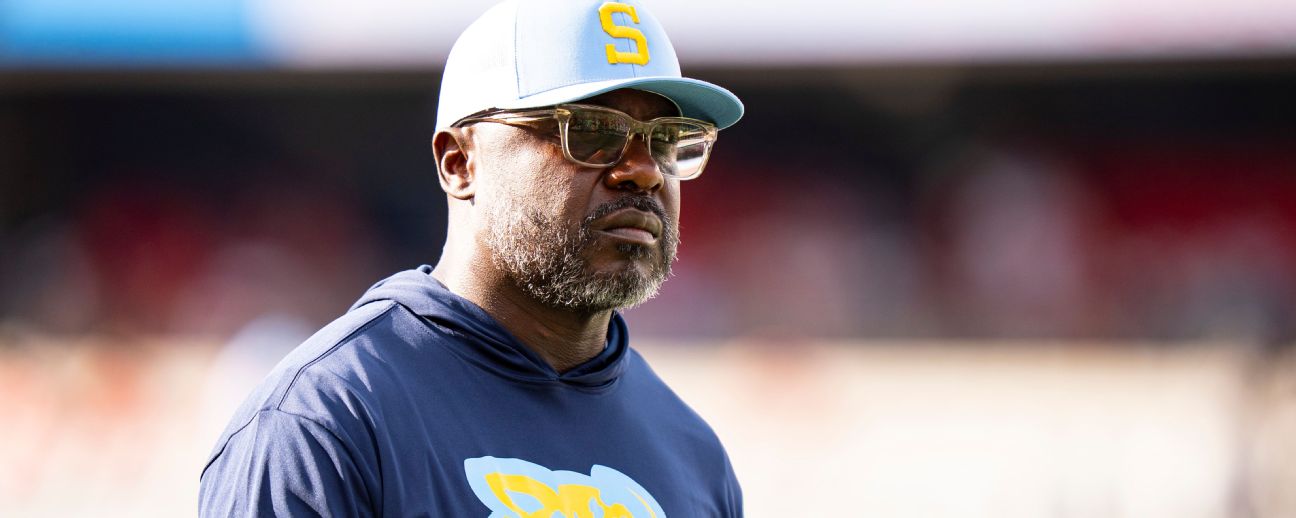
Faulk, the Hall of Fame running back for the Colts and Rams and now the head coach at Southern University, said he has been diagnosed with Parkinson’s disease. He shared that news on the podcast The Caring Neurologist, explaining that he wanted to help as many people as he can and use his experience to encourage others to pay attention to early symptoms.
That is the part that matters most here: this is not a retirement announcement, not a comeback tease, and not some vague health scare being left to drift in rumor land. It is a serious, personal revelation from one of the great backs in NFL history, and Faulk chose to speak about it openly.
What Faulk said
According to Faulk, he has been dealing with Parkinson’s for about 18 months. He said medication has helped, and he described his condition as something he has been managing rather than something that has completely changed the way he lives. In the reporting tied to his remarks, he said he has had hand rigidity and a few tremors, but that he has not seen the symptoms get worse. That kind of detail matters because it gives the story its real texture: this is a diagnosis, yes, but it is also a day-to-day reality he has been learning how to live with.
Faulk’s comments were measured and matter-of-fact, which is exactly the tone this story deserves. He did not try to dress the diagnosis up or make it sound smaller than it is. He framed it as something he wants to manage responsibly and use to help others, which is about as honest and useful a response as there is.
That perspective is also what makes the timing notable. Faulk is in his first season as Southern’s coach after previously serving as running backs coach at Colorado. He is still actively shaping a program, still around the game, and still in the public eye. This is not the kind of story that arrives after a person has already stepped away from football. It lands while he is still in the middle of it.
Why this resonates
Faulk has long been one of the sport’s most recognizable and admired figures. He played 12 NFL seasons with the Colts and Rams, won a Super Bowl, was named league MVP in 2000, and went into the Pro Football Hall of Fame in 2011. That résumé already puts him in rare air. But what gives this news extra weight is that Faulk has always seemed like one of the game’s most thoughtful voices, someone who understood that football careers end but the lessons can keep going.
That is why his decision to talk publicly about Parkinson’s feels less like a headline and more like a service. He is not pretending the diagnosis is nothing. He is not pretending it is everything, either. He is presenting it as something serious that can be faced with treatment, attention, and honesty.
For a lot of people, that is the part they need to hear. Parkinson’s can be isolating, and public figures often have a way of turning a private medical issue into a broader conversation. Faulk’s message seems aimed exactly there: at awareness, at early detection, and at the idea that a diagnosis does not erase the rest of a life.
The bigger takeaway
Faulk’s football legacy is already secure. That part has been settled for years. The Rams and Colts got one of the best running backs ever, and the sport got a player who could do almost everything from the backfield. None of that changes now.
What changes is the context around his next chapter. He is now navigating a serious health diagnosis while coaching, teaching, and staying connected to the game he helped define. That takes courage, even if he didn’t present it that way. In fact, the most striking thing about his comments is how unsentimental they were. He sounded like someone focused on what can be done, not what can be feared.
That may be the real takeaway here. Marshall Faulk is still competing — just in a different kind of game, one that asks for patience, discipline, and perspective. And if his decision to speak publicly helps even one person catch something early or feel less alone, then he has already done what he said he wanted to do.

EA has officially put a new kind of football game on the board, and this one is already causing the kind of buzz that usually belongs to a blockbuster reveal trailer, not a business update. According to the company’s own messaging around its expanded NFL partnership, EA is developing new large-scale interactive football experiences built around community, social connection, self-expression, and gameplay — language that strongly points to something much broader than the usual annual simulation release. That has fueled the growing belief that EA is building an open-world football title separate from Madden NFL and College Football.
That distinction matters. Madden and College Football are built on the core football loop: play the game, win the game, move on to the next one. An open-world football project suggests something different entirely — a living football universe where the action might stretch beyond the snap. Think character creation, social spaces, customization, side activities, pickup-style competition, and a progression system that makes your avatar feel like part of a larger world rather than just a player on a menu screen. EA has not laid out the full design publicly, so the exact format is still speculative, but the buzz is rooted in the company’s own promise of a more expansive world of interactive football experiences.
Why fans are so fired up
The reaction makes sense because football games have been stuck in a pretty familiar lane for years. Madden remains the flagship, College Football has returned with real momentum, and both serve their lanes well. But neither one is really built to scratch the “what if football had a social sandbox?” itch. That’s the real appeal here. An open-world football game could give fans something that feels less like a TV broadcast simulator and more like a football version of a living online playground.
That idea hits especially hard in 2026, when sports gaming is all about retention, identity, and community. Players do not just want to control teams anymore; they want to build a lifestyle around the sport. If EA can deliver a football game that lets users create a player, explore a larger environment, and connect with others in ways Madden and College Football do not, it could carve out a brand-new lane in the sports gaming market.
Of course, that promise is also why people are already getting ahead of themselves. “Open world” can mean a dozen different things in gaming, and not all of them are good. It could be ambitious and immersive. It could also be a giant, empty map full of menus disguised as sidewalks. The difference between a fresh football universe and a glorified loading screen is where this project will live or die.
Where it fits in EA’s football empire
EA already owns the two most important names in American football gaming. Madden gives it the NFL license and the pro football audience. College Football gives it the campus energy, the traditions, and the massive fan base that came roaring back when the series returned. A separate open-world game would not replace either one; it would be a third pillar, aimed at a different kind of player and a different kind of experience.
That’s exactly what makes this announcement so interesting. EA is not walking away from its traditional football games. It is expanding the portfolio. The company has already framed its NFL partnership as the foundation for new content and new experiences, which suggests this isn’t just a one-off experiment or a gimmick. It sounds more like a long-term play: keep Madden and College Football doing what they do, then build a new football experience for the audience that wants something bigger, looser, and more social.

That strategy also makes business sense. Annual sports games are reliable, but they can be predictable. A new open-world football title gives EA a chance to chase a different audience, test new technology, and create a platform that can grow over time instead of resetting every year. If the execution is strong, it could become the kind of game people talk about for years. If it misses, it’ll be remembered as the point where EA tried to make football into a social universe and forgot the football part.
For now, the main takeaway is simple: EA has sparked real intrigue by signaling that its football future is bigger than Madden and College Football alone. That alone is enough to set off a wave of speculation, because football fans and gamers have spent years waiting for someone to do something truly different with the sport. If EA can actually pull it off, this could be one of the most interesting football gaming projects in a long time. If not, it will at least prove that “open world football” is one of those ideas that sounds amazing in a press release and terrifying in a design meeting.

 Featured2 years ago
March Tourney: Big Money ($3 Billion!)

 Sports Gambling News2 years ago
Micah Parsons Dreams of a $40 Million Contract: The Key to His Happiness!

 General Sports News2 years ago
The Biggest World Series Favorites Since the Legendary ’02 Yankees
- Featured2 years ago
New York Jets’ Hilarious Attempt to Land Mike Vrabel Ends in Patriots’ Embrace

 Sports Gambling News2 years ago
Scottie Scheffler: The Betting Favorite at The Player

 Sports Gambling News2 years ago
Marco Penge’s Epic Comeback: From Betting Ban to Euro Tour Glory!

 NFL1 year ago
Jordan Addison’s Suspension

 General Sports News1 year ago
Trevor Lawrence Stuns Patrick Mahomes in a Monday Night Showdown